




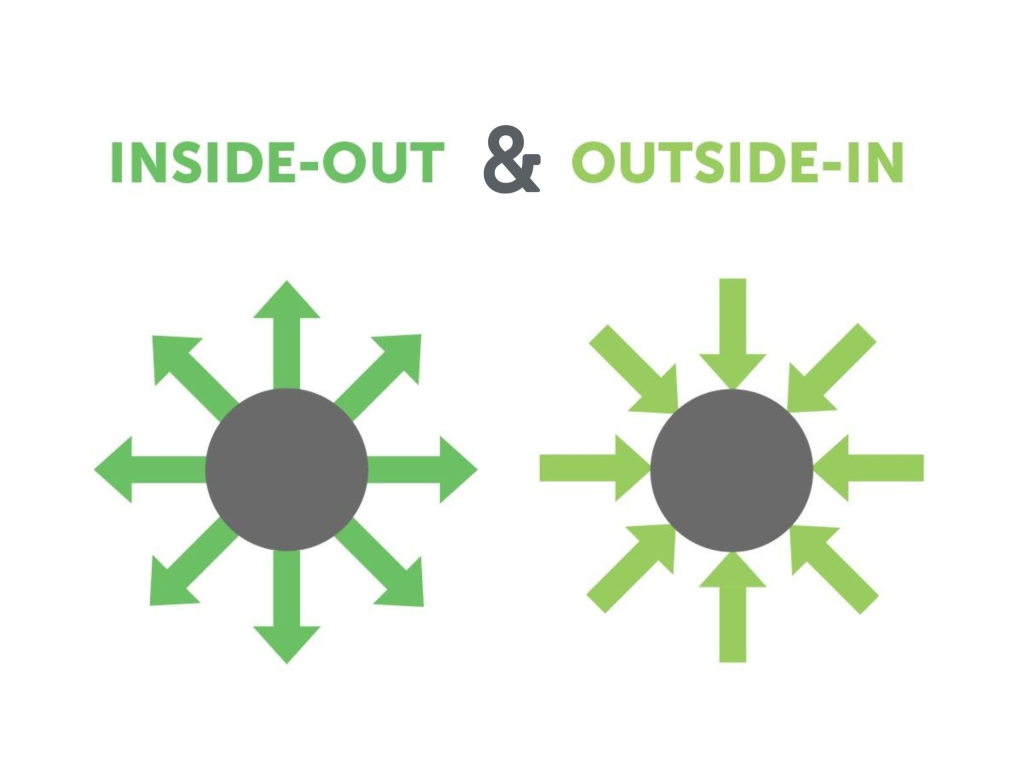
Real Behavioral Change: Inside Out or Outside In?
The question of whether true character change occurs from the outside in or from the inside out strikes at the very heart of the gospel. Scripture consistently presents transformation not as a superficial adjustment of behavior, but as a deep, inward renewal that then expresses itself outwardly in conduct. The Bible, supported richly by the writings of Ellen G. White, reveals that lasting change begins within—at the level of the heart, mind, and spirit—and then manifests in outward actions. External conformity alone is insufficient; God seeks a transformed nature.
1. The Biblical Foundation: The Heart as the Source of Behavior
The clearest starting point is Christ’s own teaching. In Mark 7:20–23 (KJV), Jesus declares:
“That which cometh out of the man, that defiles the man.
For from within, out of the heart of men, proceed evil thoughts, adulteries, fornications, murders,
Thefts, covetousness, wickedness, deceit, lasciviousness, an evil eye, blasphemy, pride, foolishness:
All these evil things come from within, and defile the man.”
Here, Christ dismantles the idea that sin originates externally. Behavior flows from the heart. Therefore, any lasting change must begin at that same source.
Similarly, Proverbs 4:23 instructs:
“Keep thy heart with all diligence; for out of it are the issues of life.”
The “issues of life”—our actions, habits, and patterns—flow from the inner life. Scripture never treats behavior as isolated; it is always the fruit of an inner condition.
2. The Old Covenant Problem: External Religion
The history of Israel demonstrates the failure of outward reform without inward transformation. God gave His law, which is holy and good (Romans 7:12), but the people repeatedly fell into disobedience because their hearts were unchanged.
In Isaiah 29:13, God says:
“This people draw near me with their mouth, and with their lips do honor me, but have removed their heart far from me.”
This is the essence of outward religion—correct words, correct forms, but an unchanged heart.
Jesus later rebukes the Pharisees in Matthew 23:25–27:
“Woe unto you, scribes and Pharisees, hypocrites! for you make clean the outside of the cup and of the platter, but within they are full of extortion and excess.
Thou blind Pharisee, cleanse first that which is within the cup and platter, that the outside of them may be clean also.”
Notice the order: first within, then without. External change without internal renewal produces hypocrisy, not holiness.
3. The Promise of the New Covenant: Internal Transformation
The solution is revealed in the New Covenant promise. In Ezekiel 36:26–27, God declares:
“A new heart also will I give you, and a new spirit will I put within you…
And I will put my spirit within you, and cause you to walk in my statutes.”
Likewise, Jeremiah 31:33:
“I will put my law in their inward parts, and write it in their hearts.”
Under the New Covenant, God does not merely command obedience—He creates it by transforming the inner person. The law is no longer external; it becomes internalized.
4. The New Birth: Transformation Begins Within
Jesus makes this explicit in His conversation with Nicodemus in John 3:3:
“Except a man be born again, he cannot see the kingdom of God.”
This “new birth” is not behavioral modification; it is a complete renewal of the inner nature.
Paul echoes this in 2 Corinthians 5:17:
“Therefore if any man be in Christ, he is a new creature: old things are passed away; behold, all things are become new.”
The transformation is ontological—it affects who we are, not just what we do.
5. The Role of the Mind and Heart
Scripture repeatedly emphasizes the renewal of the mind as central to transformation. In Romans 12:2:
“Be not conformed to this world: but be transformed by the renewing of your mind.”
The Greek word for “transformed” (metamorphoō) implies a deep, internal change—like a caterpillar becoming a butterfly.
Similarly, Philippians 2:13 states:
“For it is God which worketh in you both to will and to do of his good pleasure.”
Notice the order again: God works in you (changing desires and will), which then leads to do (actions).
6. Fruit as the Evidence, Not the Source
Behavior matters deeply—but it is the fruit, not the root. Jesus teaches in Matthew 7:17–18:
“Even so every good tree bringeth forth good fruit; but a corrupt tree bringeth forth evil fruit.
A good tree cannot bring forth evil fruit, neither can a corrupt tree bring forth good fruit.”
The nature of the tree determines the fruit. Trying to fix behavior without changing the heart is like stapling good fruit onto a bad tree—it is artificial and temporary.
7. Ellen White: The Heart Must Be Renewed
Ellen G. White consistently affirms this biblical principle. In Steps to Christ, she writes:
“It is true that there may be an outward correctness of deportment without the renewing power of Christ. The love of influence and the desire for the esteem of others may produce a well-ordered life… But this is not conversion.” (Steps to Christ, p. 58)
Here she clearly distinguishes between outward behavior and true conversion.
She continues:
“The warfare against self is the greatest battle that was ever fought. The yielding of self, surrendering all to the will of God, requires a struggle; but the soul must submit to God before it can be renewed in holiness.” (Steps to Christ, p. 43)
The change begins with surrender—a deeply internal act.
8. The New Heart Produces New Behavior
White also emphasizes that when the heart is changed, behavior follows naturally:
“When the Spirit of God takes possession of the heart, it transforms the life. Sinful thoughts are put away, evil deeds are renounced; love, humility, and peace take the place of anger, envy, and strife.” (Desire of Ages, p. 173)
This is inside-out transformation. The Spirit works within, and the life reflects it outwardly.
She adds:
“A change of heart is needed. Unless this change takes place, all efforts to reform the life will prove ineffectual.” (Review and Herald, Sept. 7, 1897)
9. The Danger of Legalism: Outside-In Religion
Legalism attempts to produce righteousness through external control—rules, pressure, or self-effort. But Scripture declares this approach powerless.
In Galatians 3:3, Paul asks:
“Are you so foolish? having begun in the Spirit, are you now made perfect by the flesh?”
External effort cannot complete what only the Spirit can begin.
White warns similarly:
“Those who depend upon the law for justification are looking to themselves… Their obedience is not prompted by love.” (Faith and Works, p. 96)
Without inward transformation, obedience becomes mechanical and joyless.
10. The Indwelling Christ: The Secret of Transformation
The true source of change is Christ living within the believer. Paul expresses this in Galatians 2:20:
“I am crucified with Christ: nevertheless I live; yet not I, but Christ lives in me.”
And in Colossians 1:27:
“Christ in you, the hope of glory.”
Christianity is not merely imitation of Christ; it is participation in His life.
White beautifully captures this:
“When Christ abides in the heart, the whole nature is transformed… The thoughts are brought into captivity to Christ.” (Mind, Character, and Personality, Vol. 1, p. 244)
11. Cooperation with God: Our Role
While transformation is initiated by God, human cooperation is essential. We do not change ourselves, but we yield to God’s work.
In Philippians 2:12–13:
“Work out your own salvation with fear and trembling.
For it is God which worketh in you…”
We “work out” what God “works in.”
White explains:
“God does not force the will of any. Man is free to choose whom he will serve… When we submit ourselves to Christ, the heart is united with His heart.” (Desire of Ages, p. 466)
12. Practical Implications: How Change Happens
Putting it all together, the process of transformation follows this pattern:
- Conviction (John 16:8) – The Spirit reveals sin.
- Surrender (Romans 12:1) – The will yields to God.
- New Birth (John 3:3) – A new heart is given.
- Indwelling Spirit (Ezekiel 36:27) – God empowers obedience.
- Renewal of Mind (Romans 12:2) – Thinking is transformed.
- Changed Behavior (Galatians 5:22–23) – Fruit appears.
The fruit of the Spirit—love, joy, peace, etc.—is not manufactured; it grows naturally from an inwardly transformed life.
13. The Soul Itself Is Transformed
The question also asks about “who we are in our soul.” Scripture teaches that the very identity of the believer is changed.
In Ephesians 4:22–24:
“Put off… the old man…
And be renewed in the spirit of your mind;
And… put on the new man, which after God is created in righteousness and true holiness.”
This is not surface-level change—it is a new self.
White affirms:
“The converting power of God changes the heart, refining and purifying the thoughts.” (Evangelism, p. 266)
Conclusion: Inside-Out Transformation Is the Gospel Way
The overwhelming testimony of Scripture and the writings of Ellen White is clear: true character change happens from the inside out.
External behavior can be modified temporarily through effort, pressure, or environment. But such change is fragile and often hypocritical. God’s method is far deeper—He transforms the heart, renews the mind, and places His Spirit within. From this inward renewal flows a life of genuine obedience, love, and holiness.
As Christ said in Luke 6:45:
“A good man out of the good treasure of his heart bringeth forth that which is good.”
The heart is the source. When the heart is changed, everything changes.
Therefore, the Christian life is not about trying harder externally, but about surrendering more fully internally—allowing Christ to dwell within and live His life through us.
Want real change in your life? Let go. Let God.