




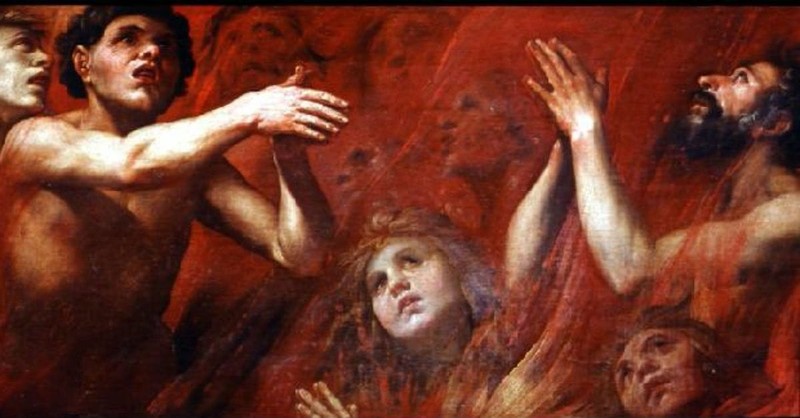
What the Bible Teaches About Death, Hell, and the Hope of the Resurrection
by Reiner Kremer
One of the most important questions every person must answer is: What happens when we die? Throughout history many have believed in purgatory, an intermediate place where souls are purified before entering heaven. Others believe that the righteous immediately enter heaven while the wicked immediately burn in hell forever.
The Bible presents a different picture. When all the Scriptures are studied together, they reveal that death is an unconscious sleep until the resurrection, that judgment belongs to God, and that eternal life is a gift given only through Jesus Christ.
Is Purgatory Found in the Bible?
The word “purgatory” does not appear anywhere in the Bible. Neither Jesus nor the apostles taught that believers go to a temporary place of suffering to complete their purification.
Instead, Scripture teaches that Christ’s sacrifice completely cleanses the believer.
“The blood of Jesus Christ his Son cleanseth us from all sin.” (1 John 1:7, KJV)
Salvation rests entirely upon Christ’s finished work.
“For by one offering he hath perfected for ever them that are sanctified.” (Hebrews 10:14, KJV)
If Christ’s sacrifice is complete, no additional suffering is needed to remove sin.
Death Is the Penalty for Sin
The Bible consistently teaches that the punishment for sin is death, not eternal conscious life in torment.
Romans 6:23 declares:
“For the wages of sin is death; but the gift of God is eternal life through Jesus Christ our Lord.”
Notice the contrast:
- Sin earns death
- Christ gives eternal life
Only the saved receive immortality. Eternal life is never described as something possessed naturally by every human being.
Ezekiel reinforces the same truth:
“The soul that sinneth, it shall die.” (Ezekiel 18:4)
God does not say the soul will live forever in torment. The soul that continues in rebellion ultimately dies.
Judgment Begins With God’s People
Peter writes:
“For the time is come that judgment must begin at the house of God.” (1 Peter 4:17)
God judges every life fairly and completely. There is no suggestion of an intermediate state where sins are gradually removed after death.
Instead, each person is judged according to his relationship with Christ.
What Happens When a Righteous Person Dies?
The Bible repeatedly compares death to sleep.
Jesus said concerning Lazarus:
“Our friend Lazarus sleeps.” (John 11:11)
When the disciples misunderstood Him, Jesus explained plainly:
“Lazarus is dead.” (John 11:14)
Throughout Scripture, God’s faithful are described as sleeping until the resurrection.
Paul writes:
“Behold, I shew you a mystery…the dead shall be raised incorruptible.” (1 Corinthians 15:51-52)
He comforts believers:
“Them also which sleep in Jesus will God bring with him.” (1 Thessalonians 4:14)
At Christ’s Second Coming:
“The dead in Christ shall rise first.” (1 Thessalonians 4:16)
If believers were already enjoying heaven consciously, there would be little purpose in a future resurrection. Instead, the resurrection awakens those who have been resting in Christ.
Solomon writes:
“The dead know not any thing.” (Ecclesiastes 9:5)
David also declares:
“His breath goes forth, he returns to his earth; in that very day his thoughts perish.” (Psalm 146:4)
Death is therefore an unconscious rest until Jesus calls His children from the grave.
What Happens to the Wicked?
The wicked also remain in the grave awaiting resurrection.
Jesus said:
“The hour is coming, in the which all that are in the graves shall hear his voice.” (John 5:28)
There are two resurrections:
- the resurrection of life
- the resurrection of condemnation (John 5:29)
The wicked are not burning in hell today. They remain in the grave until the final judgment.
What Is Hell?
The English word hell translates several different biblical words.
Sheol (Hebrew)
In the Old Testament, Sheol simply means the grave or the realm of the dead.
David wrote:
“For thou wilt not leave my soul in hell.” (Psalm 16:10)
Peter applies this prophecy to Christ:
“Because thou wilt not leave my soul in hell.” (Acts 2:27)
Again:
“His soul was not left in hell.” (Acts 2:31)
Jesus was never suffering in a place of fiery torment between Friday and Sunday. He rested in the tomb. Here, “hell” means the grave.
Hades (Greek)
The New Testament equivalent of Sheol is Hades, likewise referring to the realm of the dead.
Revelation declares:
“I have the keys of hell and of death.” (Revelation 1:18)
Jesus possesses authority over death and the grave.
Later John writes:
“Death and hell delivered up the dead which were in them.” (Revelation 20:13)
If hell gives up its dead, then it cannot be the final place of punishment.
Finally:
“Death and hell were cast into the lake of fire.” (Revelation 20:14)
The grave itself is ultimately destroyed.
Paul celebrates this victory:
“O death, where is thy sting? O grave, where is thy victory?” (1 Corinthians 15:55)
What About Gehenna?
Many verses use another word translated “hell”: Gehenna.
Examples include:
- Matthew 5:22, 29-30
- Matthew 10:28
- Matthew 18:9
- Matthew 23:15, 33
- Mark 9:43, 45, 47
- Luke 12:5
- James 3:6
Gehenna referred to the Valley of Hinnom outside Jerusalem where refuse was burned. Jesus used it as an illustration of the final destruction of the wicked.
Notice Matthew 10:28:
“Fear him which is able to destroy both soul and body in hell.”
God destroys both body and soul.
The verse does not teach endless conscious suffering but complete destruction.
Eternal Punishment or Eternal Punishing?
Jesus spoke of:
“Everlasting fire.” (Matthew 25:41)
This fire is everlasting in its results, not in the process of burning forever.
The same language appears in Jude:
“Even as Sodom and Gomorrha…are set forth for an example, suffering the vengeance of eternal fire.” (Jude 7)
Sodom is not still burning today.
Peter confirms this:
God “turning the cities of Sodom and Gomorrha into ashes condemned them with an overthrow.” (2 Peter 2:6)
The fire was eternal because its destruction was permanent.
Malachi describes the final destruction:
“The day cometh, that shall burn as an oven…all that do wickedly, shall be stubble.” (Malachi 4:1)
Stubble burns up.
Matthew 3:12 likewise says:
“He will burn up the chaff with unquenchable fire.”
Unquenchable means no one can extinguish it until it has completely accomplished God’s purpose.
Everlasting Destruction
Paul writes:
“Who shall be punished with everlasting destruction from the presence of the Lord.” (2 Thessalonians 1:9)
Notice Paul does not say everlasting destroying.
He says everlasting destruction.
The effect lasts forever.
Peter similarly compares the wicked to animals that perish:
“…as natural brute beasts…shall utterly perish.” (2 Peter 2:12)
Again, destruction—not endless preservation in agony.
What About the Rich Man and Lazarus?
Luke 16:23 is often cited:
“And in hell he lift up his eyes…”
This passage is a parable using familiar Jewish imagery to teach lessons about repentance and the sufficiency of Scripture.
Taken literally it creates impossible conclusions:
- Abraham is physically speaking across a great gulf.
- A drop of water relieves flames.
- The saved and lost converse freely.
Jesus was not giving geography of the afterlife but illustrating the consequences of rejecting God’s Word.
The central lesson is found near the end:
“If they hear not Moses and the prophets, neither will they be persuaded, though one rose from the dead.”
What About the Gates of Hell?
Jesus promised:
“The gates of hell shall not prevail against it.” (Matthew 16:18)
Here “hell” again means Hades, the grave.
Even death itself cannot overcome Christ’s church because of the resurrection.
The Fallen Angels
Peter writes:
“God spared not the angels that sinned, but cast them down to hell.” (2 Peter 2:4)
Here the word refers to Tartarus, a place or condition of restraint awaiting judgment.
It does not describe demons actively torturing human beings in an underground inferno.
The Final End of Sin
Revelation teaches that after the final judgment:
- Death is destroyed.
- The grave is destroyed.
- Sin is eliminated forever.
God creates a new heaven and a new earth where:
“There shall be no more death.” (Revelation 21:4)
An eternally burning hell somewhere in God’s universe would contradict that promise.
Instead, sin is completely removed.
Ellen G. White on Death and the State of the Dead
Ellen G. White consistently affirmed the biblical teaching that death is an unconscious sleep until the resurrection.
In The Great Controversy she wrote:
“The doctrine of natural immortality…laid the foundation of the doctrine of consciousness in death.” (The Great Controversy, ch. 33)
She also wrote:
“The dead are asleep until the resurrection.”
Regarding the final destruction of the wicked she wrote:
“Some are destroyed as in a moment, while others suffer many days…all are punished according to their deeds…their punishment finally ends in the second death.” (The Great Controversy, ch. 42)
She rejected the doctrine of eternal conscious torment because it misrepresents God’s character of justice and love.
Speaking of the redeemed she wrote:
“To the believer, death is but a small matter…Christ speaks of it as if it were of little moment.” (The Desire of Ages, ch. 58)
The believer rests safely in Christ until awakened by His voice.
The Blessed Hope
The Christian’s hope is not escape to heaven at death but resurrection at Christ’s return.
Paul declared:
“The Lord himself shall descend from heaven…and the dead in Christ shall rise first.” (1 Thessalonians 4:16)
Our hope centers upon the Second Coming.
Jesus promised:
“I will come again, and receive you unto myself.” (John 14:3)
He did not say believers would immediately come to Him at death. Rather, He returns to gather His sleeping saints.
Conclusion
The Bible does not teach purgatory. Neither does it teach that the righteous immediately enjoy heaven while the wicked consciously suffer forever.
Instead, Scripture presents a beautiful and consistent picture:
- Death is the wages of sin (Romans 6:23).
- The soul that sins shall die (Ezekiel 18:4).
- Both righteous and wicked sleep in death awaiting resurrection.
- Christ alone possesses the keys of death and the grave (Revelation 1:18).
- The righteous are raised to everlasting life at Christ’s Second Coming.
- The wicked are raised for judgment and finally experience the second death.
- Hell fire completely destroys sin and sinners, resulting in everlasting destruction—not everlasting conscious torment.
- Death and the grave themselves are finally destroyed (Revelation 20:14).
This understanding preserves the harmony of Scripture and reveals the character of God as perfectly just, infinitely loving, and completely victorious over sin. Our hope rests not in purgatory, nor in an immortal soul, but in Jesus Christ, “the resurrection, and the life” (John 11:25), who will one day awaken all who sleep in Him and give them the gift of everlasting life.