

Unveiling Revelation Chapter 2

 Christ Walking Among His Churches

The Loveless, Persecuted, Compromising, and Corrupt Churches

Key Text: Revelation 2:1

“To the angel of the church of Ephesus write…”


INTRODUCTION: THE REVELATION IS ABOUT JESUS

When we begin Revelation chapter 2, we must remember something fundamental:

Revelation is not primarily a book about beasts, political powers, persecution, or end-time events.

It is the revelation of Jesus Christ.

Revelation 1:1 begins:

“The Revelation of Jesus Christ…”

And chapter 1 introduces us to Christ standing among the seven golden lampstands.

Revelation 1:20 explains:

“The seven lampstands which you saw are the seven churches.”

The picture is remarkable.

Jesus is walking among His churches.

He is not distant.

He is not merely watching history from heaven.

He knows His people.

He knows their faithfulness.

He knows their struggles.

He knows their compromises.

He knows their suffering.

He knows their victories.

And He knows their hearts.

This becomes the central theme of Revelation 2 and 3.

The seven churches therefore represent:

  1. Seven literal churches existing in John’s day.
  2. Seven spiritual conditions that can exist among God’s people.
  3. Seven prophetic periods in the history of Christianity, according to the Adventist historicist interpretation.

This third application is particularly important to understanding Adventist prophecy.

The churches follow one another historically:

Ephesus → Smyrna → Pergamos → Thyatira → Sardis → Philadelphia → Laodicea

And the characteristics of each church correspond remarkably with major developments in Christian history.

But there is something even more important:

Every church receives a message from Jesus.


I. THE PATTERN OF THE SEVEN CHURCHES

Before examining the first four churches individually, notice the repeated structure.

Christ gives:

1. A SALUTATION

He addresses the church.

2. A DESCRIPTION

He identifies Himself using one of the characteristics revealed in chapter 1.

3. AN “I KNOW” STATEMENT

Christ demonstrates His intimate knowledge of His people.

4. A COMMENDATION

Where appropriate, Jesus tells them what they are doing right.

5. A REPROOF

Where appropriate, He identifies their spiritual problem.

6. AN ADMONITION

He tells them what they must do.

7. A PROMISE

He points the overcomer toward eternal life.

There is a progression:

Christ speaks → Christ knows → Christ corrects → Christ calls → Christ promises.

This is not merely prophecy.

It is pastoral ministry.


II. EPHESUS — THE LOVELESS CHURCH

AD 31–100

Revelation 2:1

“To the angel of the church of Ephesus write…”

The first church is Ephesus.

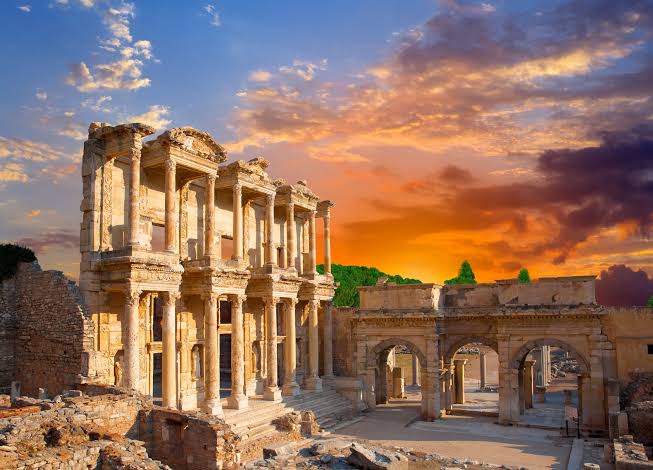
Historically, Ephesus was an important city in Asia Minor and an important center of early Christianity.

The apostolic church was founded upon the preaching of Christ and the apostles.

The prophetic application begins with the apostolic era.

AD 31–100

This corresponds approximately to the period beginning with Christ’s death, resurrection, and the establishment of the Christian church and extending through the apostolic age to the death of the last apostles.


1. THE SALUTATION TO EPHESUS

Jesus addresses:

“the angel of the church of Ephesus.”

The word “angel” means messenger.

In the prophetic application, Adventists have commonly understood the angel to represent the messenger or leadership associated with the church.

But the greater point is that Christ Himself is addressing His church.

The church does not belong to Peter.

It does not belong to Paul.

It does not belong to a denomination.

It belongs to Jesus Christ.


2. THE DESCRIPTION OF CHRIST

Revelation 2:1 continues:

“These things says He who holds the seven stars in His right hand, who walks in the midst of the seven golden lampstands.”

Notice two things.

Christ holds the stars.

The stars represent the messengers of the churches.

Christ is therefore saying:

“My church is in My hands.”

Christ walks among the lampstands.

The lampstands represent the churches.

Christ is saying:

“I am present among My people.”

This connects directly with Revelation 1.

Jesus is not merely sending a message to Ephesus.

He is walking among them.

This becomes critically important as we move through the seven churches.


3. THE “I KNOW” STATEMENT

Revelation 2:2:

“I know your works, your labor, your patience…”

Jesus knows.

That phrase should cause both comfort and conviction.

He knows:

  • our works,
  • our labor,
  • our patience,
  • our suffering,
  • our faithfulness,
  • our weaknesses,
  • our compromises,
  • our motives.

The church cannot hide from Christ.

But neither does the church have to convince Christ that it has been faithful.

He already knows.


4. THE COMMENDATION

Jesus commends Ephesus for several things.

They could not bear those who were evil.

They tested those who claimed to be apostles.

They rejected false teachers.

Revelation 2:2 says:

“you have tested those who say they are apostles and are not, and have found them liars.”

This is significant.

The early church was not instructed to accept every religious teacher simply because that person claimed divine authority.

They were to test doctrine.

This agrees with:

Acts 17:11

The Bereans were commended because they searched the Scriptures to determine whether Paul’s teaching was true.

Isaiah 8:20

“To the law and to the testimony!”

1 John 4:1

“Do not believe every spirit, but test the spirits…”

The early church had doctrinal discernment.


5. THEIR PATIENCE

Revelation 2:3:

“and you have persevered and have patience, and have labored for My name’s sake and have not become weary.”

This is an extraordinary commendation.

The apostolic church worked.

It preached.

It endured.

It suffered.

It persevered.

And it did so for Christ’s name.

This corresponds beautifully with the early Christian church described in Acts.

The gospel spread rapidly throughout the Roman world.

Paul could write that the gospel had been preached broadly throughout the inhabited world.

The early Christians were missionary-minded.


6. THE REPROOF

Then comes one of the most sobering statements in Revelation.

Revelation 2:4:

“Nevertheless I have this against you, that you have left your first love.”

Notice that Jesus did not say:

“You have abandoned doctrine.”

They had good doctrine.

He did not say:

“You have abandoned labor.”

They worked.

He did not say:

“You have abandoned perseverance.”

They persevered.

Their problem was deeper.

They had lost their first love.

This is one of the most important spiritual lessons in Revelation.

A church can be:

  • doctrinally correct,
  • biblically knowledgeable,
  • hardworking,
  • evangelistically active,
  • morally serious,

and still be in danger because its love for Christ has diminished.

Christianity can become an activity without affection.

Truth can become an intellectual possession rather than a relationship with Jesus.


7. THE ADMONITION

Revelation 2:5 gives three commands:

“Remember therefore from where you have fallen; repent and do the first works…”

REMEMBER

Look backward.

Remember what your relationship with Christ was like.

REPENT

Turn around.

DO THE FIRST WORKS

Return to the actions that flowed naturally from love.

And then Jesus gives a warning:

“or else I will come to you quickly and remove your lampstand from its place—unless you repent.”

The lampstand represents the church.

A church that loses its relationship with Christ can lose its witness.

The warning is not merely:

“You might become less successful.”

It is:

You may cease to function as My light.


8. THE NICOLAITANS

Jesus nevertheless commends Ephesus:

“But this you have, that you hate the deeds of the Nicolaitans, which I also hate.”

Whatever the precise historical identity of the Nicolaitans, the important biblical point is that Christ does not treat compromise with sin as insignificant.

Christ loves sinners.

But Christ does not love sin.

There is a difference between:

grace that saves us from sin

and

grace used as an excuse to remain in sin.


9. THE PROMISE TO EPHESUS

Revelation 2:7:

“To him who overcomes I will give to eat from the tree of life…”

Where was the tree of life?

Genesis 2 places it in Eden.

Revelation 22 places it in the New Jerusalem.

The Bible therefore begins with humanity separated from the tree of life and ends with the redeemed restored to it.

The gospel story is ultimately:

Eden lost → Christ’s redemption → Eden restored.

The overcomer receives eternal life.

And notice the condition:

“He who has an ear, let him hear what the Spirit says to the churches.”

The message is not merely for ancient Ephesus.

It is for us.


EPHESUS IN THE HISTORICIST ADVENTIST INTERPRETATION

AD 31–100

Characteristic: Apostolic church

Strengths:

  • doctrinal purity
  • missionary zeal
  • perseverance
  • rejection of false teachers

Problem:

  • loss of first love

Admonition:

  • remember
  • repent
  • return to first works

Promise:

  • tree of life

THE LESSON FOR TODAY

It is possible to have:

truth without tenderness,
doctrine without devotion,
work without worship,
activity without intimacy.

Jesus wants more than correct theology.

He wants our hearts.


III. SMYRNA — THE PERSECUTED CHURCH

AD 100–313

We now move from Ephesus to Smyrna.

If Ephesus represents the apostolic church, Smyrna represents the period of severe persecution experienced by Christians under the Roman Empire.

Approximately:

AD 100–313

The traditional Adventist prophetic application identifies this as the great era of pagan Roman persecution.


1. THE SALUTATION

Revelation 2:8:

“And to the angel of the church in Smyrna write…”

But notice how Jesus describes Himself.


2. THE DESCRIPTION OF CHRIST

“These things says the First and the Last, who was dead, and came to life.”

Why would persecuted Christians need to hear this?

Because they were facing death.

Christ essentially says:

“I have already gone through death.”

But He did not remain in the grave.

“who was dead, and came to life.”

Jesus is therefore the perfect Savior for a persecuted church.

He is:

The First.

The Last.

The One who died.

The One who lives.

Death cannot defeat Him.

And therefore death cannot ultimately defeat His people.


3. THE “I KNOW” STATEMENT

Revelation 2:9:

“I know your works, tribulation, and poverty…”

Again:

“I know.”

Jesus knew what His people were experiencing.

They were experiencing:

  • tribulation,
  • poverty,
  • opposition,
  • persecution.

But Jesus adds:

“but you are rich.”

What an extraordinary contrast.

The world saw poverty.

Christ saw riches.

The world saw defeated Christians.

Christ saw victorious saints.

The world could take away their possessions.

It could not take away their eternal inheritance.


4. THE PERSECUTION

Revelation 2:10:

“Do not fear any of those things which you are about to suffer.”

Christ does not promise:

“You will not suffer.”

He says:

“Do not fear.”

There is a profound difference.

Christianity does not promise an absence of suffering.

It promises the presence of Christ in suffering.


5. “TEN DAYS”

Revelation 2:10 says:

“you will have tribulation ten days.”

In the Adventist historicist interpretation, this is commonly understood according to the prophetic day-year principle:

One prophetic day = one literal year.

Thus the ten days are understood as ten years of particularly intense persecution.

Adventist interpreters have traditionally associated this with the persecution under the Roman emperor Diocletian, approximately AD 303–313.

This corresponds closely with the closing period of pagan Roman persecution before Constantine’s rise and the legalization of Christianity.


6. THE CROWN OF LIFE

Jesus says:

“Be faithful until death, and I will give you the crown of life.”

Notice the phrase:

“until death.”

Not:

“until inconvenience.”

Not:

“until Christianity becomes unpopular.”

Not:

“until obedience becomes expensive.”

Until death.

The Christian’s loyalty is not dependent upon circumstances.


7. SMYRNA HAS NO REPROOF

This is important.

Jesus does not say:

“I have this against you.”

Smyrna receives no condemnation.

The suffering church is presented as faithful.

Sometimes suffering produces what prosperity cannot.

Persecution can strip Christianity down to its essentials.

When everything else is taken away, the question becomes:

Do I still have Jesus?


8. THE PROMISE

Revelation 2:11:

“He who overcomes shall not be hurt by the second death.”

This is especially meaningful from the biblical Adventist understanding of the state of the dead.

The Bible distinguishes between:

The first death

Physical death.

The second death

The final destruction of the wicked following the judgment.

Revelation 20:14 calls the lake of fire:

“the second death.”

The promise to Smyrna is therefore ultimate.

The persecutor may kill the body.

But the persecutor cannot destroy the eternal life Christ gives to the faithful.


SMYRNA IN THE HISTORICIST ADVENTIST INTERPRETATION

AD 100–313

Characteristic: Persecuted church

Strengths:

  • faithfulness
  • endurance
  • spiritual richness despite material poverty

Problem:

  • no specific rebuke

Admonition:

  • do not fear
  • be faithful unto death

Promise:

  • crown of life
  • protection from the second death

THE LESSON

Smyrna teaches:

A church can look poor to the world and be rich before God.


IV. PERGAMOS — THE COMPROMISING CHURCH

AD 313–538

Now we enter a dramatically different period.

The church moves from persecution to political acceptance.

This is one of the great turning points in Christian history.


1. THE SALUTATION

Revelation 2:12:

“And to the angel of the church in Pergamos write…”


2. THE DESCRIPTION OF CHRIST

Jesus identifies Himself as:

“He who has the sharp two-edged sword.”

The sword represents the Word of God.

Hebrews 4:12 describes the Word of God as:

“living and powerful, and sharper than any two-edged sword…”

Why is the sword appropriate for Pergamos?

Because Pergamos represents an era when the church would need the Word of God to distinguish:

truth from compromise.


3. “I KNOW WHERE YOU DWELL”

Revelation 2:13:

“I know your works, and where you dwell, where Satan’s throne is.”

Again:

Jesus knows.

But now notice the language.

The church is dwelling in a difficult spiritual environment.

Jesus calls it:

“Satan’s throne.”

The traditional Adventist interpretation sees this period as involving the increasing influence of pagan Rome and the transformation of Christianity after the conversion and political patronage associated with Constantine.


4. THE GREAT TRANSITION

Under Constantine, Christianity went from being persecuted to being increasingly favored by the Roman state.

The Edict of Milan in AD 313 is a major historical marker.

Christianity was no longer simply a persecuted minority.

The church began to experience:

  • political recognition,
  • wealth,
  • social influence,
  • imperial support.

At first this appeared to be a great victory.

But something dangerous happened.

The church began to gain the world.

And eventually:

The world began to gain the church.

This is the danger of Pergamos.


5. THE COMMENDATION

Jesus says:

“And you hold fast to My name, and did not deny My faith…”

Even during this period of compromise, faithful Christians remained.

Jesus specifically mentions:

“Antipas, My faithful martyr…”

Whether Antipas represents a specific historical individual or is symbolic of faithful opposition, the central lesson remains:

Christ always has faithful people even in dark periods of history.


6. THE REPROOF — THE DOCTRINE OF BALAAM

Revelation 2:14:

“But I have a few things against you…”

Some in Pergamos were holding:

“the doctrine of Balaam.”

Why Balaam?

The story is found in Numbers 22–25.

Balaam could not curse Israel directly.

So Israel was enticed into compromise.

The danger was not merely persecution from outside.

It was corruption from within.

This is exactly the danger of Pergamos.


7. THE DANGER OF COMPROMISE

Pergamos teaches a profound principle:

Satan does not always destroy the church through persecution.

Sometimes he attempts to destroy it through prosperity.

The Smyrna church was attacked from outside.

Pergamos was increasingly compromised from within.

The temptation changed.

Instead of:

“Deny Christ or die.”

The temptation became:

“Keep Christ, but compromise enough to fit comfortably into the culture.”

This is often more subtle and therefore more dangerous.


8. THE NICOLAITANS

Jesus again mentions the Nicolaitans:

“So you also have those who hold the doctrine of the Nicolaitans…”

The issue involves compromise between Christian faith and practices contrary to God’s revealed will.

The precise historical details surrounding the Nicolaitans are debated, but the prophetic principle is clear:

Christ will not accept a church that knowingly blends truth with error.


9. THE ADMONITION

Revelation 2:16:

“Repent, or else I will come to you quickly and will fight against them with the sword of My mouth.”

Notice the contrast.

Jesus has the sword.

The church must be governed by the Word.

When the church compromises Scripture, Christ Himself becomes the judge.


10. THE PROMISE TO PERGAMOS

Revelation 2:17:

“To him who overcomes I will give some of the hidden manna to eat.”

Manna points us back to Israel in the wilderness.

Jesus Himself is the Bread of Life.

John 6:32–35 points beyond physical bread to Christ.

The overcomer receives:

Hidden manna

Christ provides spiritual nourishment that the world cannot provide.

Then:

“I will give him a white stone, and on the stone a new name written…”

The new name represents a transformed identity and intimate relationship with Christ.

The world may label God’s people.

Christ gives them a new identity.


PERGAMOS IN THE HISTORICIST ADVENTIST INTERPRETATION

AD 313–538

Characteristic: Compromising church

Strengths:

  • held Christ’s name
  • maintained faith despite opposition
  • faithful witnesses remained

Problem:

  • compromise with paganism
  • false doctrines
  • spiritual accommodation

Historical transition:

  • Christianity gains imperial favor
  • pagan Roman persecution declines
  • church and state become increasingly intertwined

Admonition:

  • repent
  • return to the Word

Promise:

  • hidden manna
  • white stone
  • new name

THE LESSON

Pergamos asks us:

What happens when the church stops confronting the culture and begins accommodating it?


V. THYATIRA — THE CORRUPT CHURCH

AD 538–1500s

Thyatira is the longest prophetic period represented by the seven churches.

The traditional Adventist historicist interpretation places this period approximately from:

AD 538 to the 1500s

This corresponds to the medieval period of Western Christianity and the rise and dominance of the papal system.

The date 538 is particularly significant in Adventist prophetic interpretation because it is associated with the beginning of the 1,260-year period of papal supremacy described symbolically in Daniel and Revelation.

The period extends toward the Protestant Reformation.


1. THE SALUTATION

Revelation 2:18:

“And to the angel of the church in Thyatira write…”


2. THE DESCRIPTION OF CHRIST

Jesus describes Himself as:

“the Son of God, who has eyes like a flame of fire, and His feet like fine brass.”

The imagery is powerful.

Eyes like fire

Christ sees everything.

Nothing is hidden from Him.

His eyes penetrate hypocrisy.

Feet like brass

His judgments are firm and certain.

This is no longer merely the Christ who observes.

This is the Christ who judges.


3. THE “I KNOW” STATEMENT

Revelation 2:19:

“I know your works, love, service, faith, and your patience…”

Notice something important.

Even during Thyatira, Christ sees good among His people.

He says:

“the last are more than the first.”

That means there was growth in some areas.

This is crucial to understanding Adventist historicism.

When Adventists identify Thyatira with the medieval church age, this does not mean that every Christian during that period was corrupt.

God always had faithful people.

The prophetic message addresses the dominant institutional and spiritual condition, while recognizing faithful individuals within it.


4. THE REPROOF — “THAT WOMAN JEZEBEL”

Revelation 2:20:

“Nevertheless I have a few things against you, because you allow that woman Jezebel…”

The name Jezebel takes us back to the Old Testament.

Jezebel was the wife of King Ahab.

She promoted:

  • idolatry,
  • false worship,
  • religious compromise,
  • persecution of God’s prophets.

The historical Jezebel becomes a prophetic symbol of apostasy.


5. WHY JEZEBEL?

The Jezebel story is found especially in:

1 Kings 16–19

and

1 Kings 21

Jezebel did not simply reject religion.

She attempted to merge false worship with the religion of Israel.

That is precisely why the symbol is so powerful.

The problem is not merely atheism.

It is:

False worship presented as true worship.


6. THYATIRA AND MEDIEVAL CHRISTIANITY

From the Adventist historicist perspective, the Thyatira period corresponds to the centuries during which the papacy exercised extensive religious and political authority.

The Reformation would later challenge major doctrines and practices that had developed during this period.

Among the central issues were:

  • the authority of Scripture,
  • human tradition,
  • the mediation of priests,
  • justification by faith,
  • the nature of salvation,
  • the authority of the papacy,
  • religious liberty,
  • worship.

The great Reformation principle would eventually become:

Sola Scriptura

Scripture alone as the ultimate authority for doctrine.

This does not mean Christians ignore history, reason, or experience.

It means that Scripture remains the final inspired standard by which all teaching is tested.


7. “I GAVE HER TIME TO REPENT”

Revelation 2:21 says:

“And I gave her time to repent of her sexual immorality, and she did not repent.”

This reveals something about God’s character.

Even when God judges, He gives opportunity for repentance.

God is not eager to destroy.

He calls people to turn back.

This is consistent with:

Ezekiel 18:23

God takes no pleasure in the death of the wicked.

2 Peter 3:9

God is:

“not willing that any should perish but that all should come to repentance.”

Judgment comes after mercy has been rejected.


8. THE JUDGMENT OF JEZEBEL

Revelation 2:22–23 describes severe judgment.

The message is unmistakable:

Christ knows what is happening in His church.

Institutional power cannot hide corruption from Him.

Religious titles cannot hide corruption.

Political influence cannot hide corruption.

Historical longevity cannot hide corruption.

Christ sees.


9. “I AM HE WHO SEARCHES THE MINDS AND HEARTS”

Revelation 2:23:

“I am He who searches the minds and hearts.”

This takes us back to the central theme of Revelation 2.

Christ knows.

He knows Ephesus.

He knows Smyrna.

He knows Pergamos.

He knows Thyatira.

He knows His church today.

And He knows each individual within His church.


10. THE FAITHFUL REMNANT IN THYATIRA

Here is one of the most beautiful aspects of the message.

Jesus says:

“But to you I say, and to the rest in Thyatira…”

There were people who had not embraced the corruption.

They had remained faithful.

This is important historically.

Even during the darkest periods of Christian history, God had faithful witnesses.

Adventists have historically connected this concept with groups and individuals who preserved biblical truth during the medieval period, including such movements as the Waldenses, while recognizing that historical details and theological positions varied among these groups.

The larger biblical principle is:

God has never been without witnesses.


11. “HOLD FAST”

Jesus tells His faithful people:

“hold fast what you have till I come.”

What a powerful command.

When the world becomes confused:

Hold fast.

When truth becomes unpopular:

Hold fast.

When compromise becomes attractive:

Hold fast.

When obedience becomes costly:

Hold fast.

When Christ seems distant:

Hold fast.


12. THE PROMISE TO THYATIRA

Revelation 2:26:

“And he who overcomes, and keeps My works until the end, to him I will give power over the nations.”

The promise points toward Christ’s kingdom.

The faithful will ultimately participate with Christ in His victorious reign.

Then Jesus says:

“He shall rule them with a rod of iron…”

This connects Revelation with Psalm 2.

The kingdom of Christ ultimately triumphs over every earthly power.


13. THE MORNING STAR

Revelation 2:28:

“and I will give him the morning star.”

Who is the Morning Star?

Revelation later identifies Christ with the morning star.

Revelation 22:16:

“I am…the Bright and Morning Star.”

The ultimate reward of the overcomer is not merely a place.

It is Christ Himself.

This is one of the great themes of Revelation.

We do not overcome merely to receive heaven.

We overcome because we want Jesus.


THYATIRA IN THE HISTORICIST ADVENTIST INTERPRETATION

AD 538–1500s

Characteristic: Medieval/corrupt church period

Strengths:

  • love
  • service
  • faith
  • patience
  • faithful believers remained

Problem:

  • spiritual corruption
  • false worship
  • compromise
  • religious authority supplanting biblical authority

Symbol:

  • Jezebel

Admonition:

  • repent
  • hold fast
  • remain faithful until Christ comes

Promise:

  • authority with Christ
  • participation in His kingdom
  • the Morning Star

VI. THE FOUR CHURCHES AS A PROPHETIC STORY

Now step back and look at the progression.

EPHESUS

AD 31–100

The church begins with truth and love.

But eventually:

love begins to diminish.


SMYRNA

AD 100–313

The church experiences:

persecution.

Yet persecution produces:

faithfulness.


PERGAMOS

AD 313–538

Persecution gives way to:

political favor.

Political favor produces:

compromise.


THYATIRA

AD 538–1500s

Compromise develops into:

institutional corruption and religious domination.

Yet even in the darkest period:

God preserves a faithful remnant.


VII. THE PATTERN OF SATAN’S ATTACK

There is another important lesson.

Satan’s methods change.

Against Ephesus:

Distraction and loss of love.

Against Smyrna:

Persecution.

Against Pergamos:

Compromise.

Against Thyatira:

Corruption and false worship.

This teaches us that Satan does not use only one strategy.

If persecution does not work, he may use prosperity.

If prosperity does not work, he may use compromise.

If compromise succeeds, corruption follows.

Therefore God’s people must remain anchored to Christ and Scripture regardless of the method of attack.


VIII. THE “I KNOW” OF JESUS

Perhaps the most important phrase running through Revelation 2 is:

“I KNOW.”

Jesus says:

I know your works.

I know your labor.

I know your patience.

I know your tribulation.

I know your poverty.

I know where you dwell.

I know your faithfulness.

I know your compromise.

I know your love.

I know your service.

I know your corruption.

I know your hearts.

This should terrify hypocrisy.

But it should comfort the faithful.

Because the same Jesus who sees our failures also sees our faithfulness.


IX. CHRIST IS WALKING AMONG THE LAMPSTANDS

Remember Revelation 1.

John sees Jesus:

walking among the seven golden lampstands.

Then chapters 2 and 3 demonstrate what that means.

Christ is intimately acquainted with His people.

This prepares the way for the messages to the churches because Jesus is not addressing anonymous institutions.

He is addressing people He knows.

This connects beautifully with Jesus’ words in John 10:27–29:

“My sheep hear My voice, and I know them, and they follow Me.”

This is the Christ of Revelation.

He knows His sheep.

He knows His churches.

He knows their struggles.

He knows their names.

He knows their hearts.

And He is calling them to follow Him.


X. THE FOUR GREAT WARNINGS

Revelation 2 therefore gives us four great warnings.

1. EPHESUS:

DON’T LOSE YOUR LOVE

You can know truth and lose intimacy with Christ.


2. SMYRNA:

DON’T FEAR SUFFERING

Faithfulness may cost you something.

But Christ promises:

the crown of life.


3. PERGAMOS:

DON’T COMPROMISE

The church must never exchange biblical truth for cultural acceptance.


4. THYATIRA:

DON’T CONFUSE RELIGIOUS AUTHORITY WITH DIVINE AUTHORITY

Christ’s Word must remain the final standard.


XI. WHAT DOES “OVERCOME” MEAN?

Each church receives a promise:

“To him who overcomes…”

The word “overcomes” is crucial.

The Christian life is not passive.

We are called to overcome:

  • temptation,
  • compromise,
  • fear,
  • false teaching,
  • spiritual apathy,
  • persecution,
  • worldliness,
  • sin.

But Revelation never teaches that we overcome by our own strength.

Victory is found in Christ.

Revelation 12:11 says:

“And they overcame him by the blood of the Lamb…”

The overcomer is not the person who says:

“I am strong enough.”

The overcomer says:

“Christ is sufficient.”


XII. THE GOSPEL INSIDE REVELATION 2

Some people read Revelation primarily as a book of judgment.

But look closely.

Every warning is accompanied by an invitation.

Ephesus:

Repent.

Smyrna:

Be faithful.

Pergamos:

Repent.

Thyatira:

Hold fast.

And every invitation points toward a promise.

Tree of Life.

Crown of Life.

Hidden Manna.

New Name.

Kingdom authority.

Morning Star.

In other words:

Revelation is not merely warning the church about judgment.

It is calling the church into a relationship with Jesus so that it may receive the inheritance He has prepared.


XIII. A SEVENTH-DAY ADVENTIST PROPHETIC PERSPECTIVE

The historicist interpretation sees Revelation 2 as part of a continuous prophetic history.

The sequence is:

Church Approximate Period Major Characteristic
Ephesus AD 31–100 Apostolic / Loveless
Smyrna AD 100–313 Persecuted
Pergamos AD 313–538 Compromising
Thyatira AD 538–1500s Medieval / Corrupt
Sardis 1500s–1700s Reformation
Philadelphia 1700s–1844 Missionary/Advent movement
Laodicea 1844–Second Coming Lukewarm

The remarkable thing is that the next church does not erase the previous church.

Elements of Ephesus, Smyrna, Pergamos, and Thyatira can all be found throughout Christian history.

And spiritually, they can all exist within the individual believer.

A person can be:

Ephesus in love,

Smyrna in suffering,

Pergamos in compromise,

and

Thyatira in spiritual corruption

at different moments.

Therefore the prophetic interpretation should never be used merely to point fingers at historical Christians.

The message must come back to us.


XIV. CHRIST’S MESSAGE TO THE CHURCH TODAY

Revelation 2 asks us several questions.

Have we lost our first love?

Are we doing religious work while our personal relationship with Jesus grows cold?

Are we willing to remain faithful when Christianity becomes costly?

Smyrna reminds us:

Be faithful until death.

Are we compromising truth for acceptance?

Pergamos warns:

Do not exchange truth for cultural approval.

Are we allowing false teaching to enter God’s church?

Thyatira reminds us:

Christ sees and judges spiritual corruption.


XV. THE CENTRAL MESSAGE OF REVELATION 2

If we reduce Revelation 2 to church history, we miss the deepest message.

The deepest message is:

JESUS KNOWS HIS CHURCH.

He knows the faithful.

He knows the suffering.

He knows the workers.

He knows the compromisers.

He knows the deceivers.

He knows the persecuted.

He knows the remnant.

He knows you.

And because He knows us, He speaks.

Sometimes He says:

“Well done.”

Sometimes:

“Repent.”

Sometimes:

“Do not fear.”

Sometimes:

“Hold fast.”

But behind every message is the same Savior.

The One who died.

The One who rose again.

The One who walks among the lampstands.

The One who holds the stars.

The One whose eyes are like fire.

The One who has the sword of God’s Word.

The One who gives the crown of life.

The One who gives the hidden manna.

The One who gives the new name.

The One who gives the Morning Star.

And ultimately:

THE ONE WHO IS COMING AGAIN.


CONCLUSION

Revelation 2 begins the prophetic journey through the history of Christ’s church.

Ephesus teaches:

Never allow activity to replace love.

Smyrna teaches:

Never allow suffering to destroy faith.

Pergamos teaches:

Never allow prosperity to produce compromise.

Thyatira teaches:

Never allow religious corruption to replace biblical truth.

And above all four churches stands Jesus.

He is walking among the lampstands.

He is watching.

He is listening.

He is speaking.

He is correcting.

He is encouraging.

He is calling.

And He is promising.

The question of Revelation 2 is therefore not merely:

“Which church period are we studying?”

The greater question is:

“What is Jesus saying to me?”

Because the final words to every church are:

“He who has an ear, let him hear what the Spirit says to the churches.”

The Spirit is speaking.

Christ is walking among the lampstands.

And the invitation remains:

“He who overcomes…”

Will eat from the tree of life.

Will receive the crown of life.

Will not be hurt by the second death.

Will receive the hidden manna.

Will receive a new name.

Will reign with Christ.

Will receive the Morning Star.

The story of Revelation is ultimately not the story of the failure of God’s church.

It is the story of Jesus Christ faithfully leading His people through history until He brings them home.

Jesus knows His church.

Jesus knows His people.

Jesus knows you.

And He is calling us to overcome.


Appeal:

“Father, help us not merely to understand Revelation, but to hear what Your Spirit is saying to us. If we have lost our first love, bring us back. If we are suffering, give us courage. If we are compromising, give us conviction. If we have tolerated error, give us discernment. Help us hold fast to Jesus and to His Word. Give us the faith of Smyrna, the discernment of Ephesus, the courage to reject Pergamum’s compromise, and the faithfulness of Thyatira’s remnant. And above all, help us to overcome through the blood of the Lamb, so that when Jesus comes, we may receive the crown of life and live with Him forever. In Jesus’ name, Amen.”


Share this post

Great Controversy & Cosmic ConflictProphecy & End Time EventsRighteousness by Faith

Related content

Explore this topic by clicking on the resources below.

Article

“Righteousness will go before Him, and shall make His footsteps our pathway” (Psalm 85:13, NKJV). Revelation contains the heartbeat of the Seventh-day...

“Righteousness will go before Him, and shall make His footsteps our pathway” (Psalm 85:13, NKJV).
Revelation contains the heartbeat...

Article

Sola Scriptura: The Scripture Alone is the Standard The doctrine that the Bible alone is the ultimate authority was the “Formal Principle” of the...

Sola Scriptura: The Scripture Alone is the Standard
The doctrine that the Bible alone is the ultimate authority was...

Article

Hell stands at the crossroads of life’s greatest mysteries: death, eternity, and the afterlife. No wonder it generates so much fear and curiosity—and so...

Hell stands at the crossroads of life’s greatest mysteries: death, eternity, and the afterlife. No wonder it generates...

    Never miss a new release!

    Sign up to receive email notifications about the latest Bible study materials.