




Grace, Enmity, and the Great Conflict Between Christ and Satan
There is a mystery at the very heart of the Christian gospel: the cross that reveals the love of God also awakens the hatred of Satan. The cross is God’s supreme revelation of grace, but it is also an offense to the kingdom of darkness because it exposes sin, destroys Satan’s claims, and offers fallen humanity freedom from his dominion.
The conflict can be traced back to Eden.
After Adam and Eve sinned, God spoke words that contained both judgment and hope:
“And I will put enmity between you and the woman, and between your seed and her Seed; He shall bruise your head, and you shall bruise His heel.”
—Genesis 3:15, NKJV
Genesis 3:15 is more than a promise concerning the coming Messiah. It is the opening declaration of the great controversy between Christ and Satan. Ellen G. White describes it as a prophecy embracing the entire history of humanity and the great conflict that would continue until the close of time.
Notice something remarkable about God’s statement: “I will put enmity.”
Human beings, left to themselves, do not naturally hate Satan’s principles. Sin has produced a natural sympathy between the sinner and the tempter. But God intervenes. His grace creates something in fallen humanity that did not previously exist—a hatred of sin and resistance to Satan.
Ellen White expresses the thought this way: “It is the grace that Christ implants in the soul which creates in man enmity against Satan.”
That statement goes to the very heart of the gospel.
Grace is not merely God’s willingness to overlook sin. Grace is God’s transforming power. Christ does not simply pardon the captive; He begins the work of liberating the captive.
Without that grace, humanity remains vulnerable to Satan’s influence. But when Christ enters the life, a new principle appears. What was once attractive becomes repulsive. What was once resisted becomes desirable. The heart begins to recognize the difference between truth and error, righteousness and rebellion.
Grace creates enmity.
And that enmity explains why the Christian life becomes a conflict.
Satan’s Hatred of the Human Race
Why does Satan hate humanity?
The answer is deeply connected with the cross.
Human beings are fallen, sinful, and rebellious—and yet God loves them. Through Christ, they become objects of divine mercy.
That is precisely what Satan hates.
Ellen White writes that Satan’s enmity against humanity is kindled because, through Christ, human beings are objects of God’s love and mercy. Satan seeks to frustrate God’s plan of redemption, deface God’s workmanship, and bring dishonor upon the Creator.
Think about the implications.
Satan wants the sinner to believe that God does not love him.
The gospel says God loves him so much that Christ died for him.
Satan wants the sinner to remain enslaved to sin.
The gospel says Christ can break sin’s dominion.
Satan wants humanity to reflect his character.
Christ comes to restore the image of God.
Satan therefore attacks the very people Christ came to save.
This is why Peter gives such a solemn warning:
“Be sober, be vigilant; because your adversary the devil walks about like a roaring lion, seeking whom he may devour.”
—1 Peter 5:8
The Christian is not fighting an imaginary enemy.
Paul explains:
“For we do not wrestle against flesh and blood, but against principalities, against powers, against the rulers of the darkness of this age, against spiritual hosts of wickedness in the heavenly places.”
—Ephesians 6:12
The battle is spiritual.
And Satan’s greatest weapon is deception.
Paul says that Satan is “the god of this age” who has blinded the minds of unbelievers so that they cannot see the light of the gospel of Christ (2 Corinthians 4:4).
The conflict, therefore, is fundamentally a conflict over truth and character.
The Spirit of Christ Versus the Spirit of Satan
The great controversy became visible when Jesus entered this world.
Christ did not merely preach righteousness. He embodied it.
He did not merely tell people what God was like. He revealed God’s character.
And that created a confrontation.
Ellen White describes the reception of Jesus in one of the most powerful passages in The Great Controversy. She writes that the antagonism between the spirit of Christ and the spirit of Satan was displayed most strikingly in the world’s reception of Jesus. It was Christ’s purity and holiness, His self-denial and sinless devotion, that called forth hatred. His life became a perpetual reproof.
Jesus did not have to insult people to expose sin.
His purity exposed impurity.
His humility exposed pride.
His self-sacrifice exposed selfishness.
His truth exposed error.
His love exposed hatred.
His obedience exposed rebellion.
His life was a living demonstration of what humanity could be when completely surrendered to God.
That is why Christ was hated.
The problem was not simply what Jesus said. The problem was what Jesus was.
His character was an indictment against the kingdom of Satan.
The Desire of Ages makes the same point concerning the religious leaders of Christ’s day. Jesus’ spotless integrity revealed their insincerity. His life exposed the hollowness of their religious profession and revealed the ugliness of sin. Such light was unwelcome.
And eventually the conflict led to Calvary.
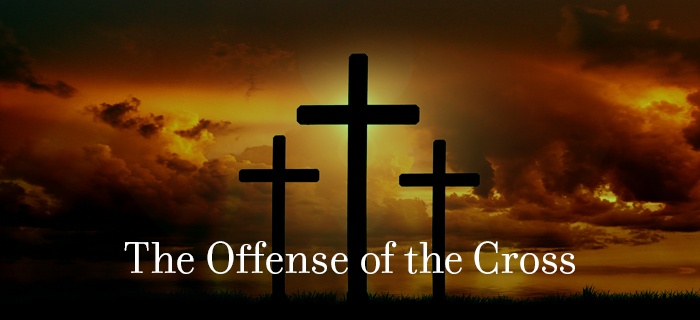
The Cross Is an Offense
The cross was not an accident.
It was the ultimate collision between the kingdom of God and the kingdom of Satan.
At Calvary, Satan appeared to triumph. Christ was rejected, condemned, mocked, tortured, and crucified.
But heaven saw something entirely different.
The cross revealed the character of God.
It revealed that God would rather bear the consequences of sin Himself than abandon His children.
It revealed that divine love does not depend upon human worthiness.
It revealed that God does not force the conscience.
It revealed that Christ would willingly suffer for those who hated Him.
And it exposed the character of Satan.
The one who claimed that God’s government was oppressive was revealed as the destroyer.
The One accused of seeking the submission of humanity was revealed as the One who gave Himself for humanity.
The cross turned Satan’s accusation against himself.
And that is why the cross remains an offense.
The cross says that sin is deadly.
The cross says that self must die.
The cross says that human righteousness cannot save us.
The cross says that God’s law is not the problem—sin is.
The cross says that we need a Savior.
And the cross says that the way of Christ is the way of self-denial.
Jesus told His followers:
“If anyone desires to come after Me, let him deny himself, and take up his cross daily, and follow Me.”
—Luke 9:23
That message is offensive to human pride.
We want salvation without surrender.
Forgiveness without transformation.
Christ without a cross.
Grace without obedience.
But the biblical gospel offers none of these distortions.
Grace forgives—and grace transforms.
The Offense Has Not Ceased
Ellen White makes a striking observation:
“The offense of the cross has not ceased.”
The same conflict that surrounded Jesus continues to surround His followers.
Paul states it plainly:
“Yes, and all who desire to live godly in Christ Jesus will suffer persecution.”
—2 Timothy 3:12
This does not mean that every Christian will experience the same degree of persecution. But it does mean that the fundamental conflict between the spirit of Christ and the spirit of Satan has not ended.
As long as sin remains, there will be opposition to truth.
As long as Satan deceives, there will be resistance to the gospel.
As long as self seeks supremacy, the cross will be offensive.
Ellen White writes that hatred of the pure principles of truth, together with reproach and persecution against those who uphold them, will continue as long as sin and sinners remain.
But here we must be careful.
Christianity does not teach us to become hostile toward people.
Jesus never taught His followers to retaliate against those who rejected Him.
The spirit of Christ is not coercion.
It is love.
In The Desire of Ages, Ellen White emphasizes that Christ never sought to compel people to receive Him. He sought to win them through the revelation of God’s love. She contrasts this with the spirit of Satan, which seeks to control conscience and injure those who disagree.
Therefore, the Christian’s enemy is not another human being.
The enemy is Satan and his deception.
We fight error with truth.
We answer hatred with love.
We answer coercion with liberty.
We answer persecution with faithfulness.
And we answer Satan with Christ.
Truth and Error
The great controversy is ultimately a battle between truth and error.
Satan began by questioning God’s Word: “Has God indeed said?”
That question introduced suspicion about God’s character.
The serpent suggested that God’s command was restrictive, that God’s motives were questionable, and that disobedience would actually produce greater freedom.
The same strategy continues.
Satan still seeks to make error appear attractive and truth appear oppressive.
He still attempts to distort God’s character.
He still seeks to separate people from Scripture.
He still blinds minds to the gospel.
He still encourages humanity to substitute self for God.
But Jesus came as “the way, the truth, and the life” (John 14:6).
Truth is not merely a collection of propositions.
Truth is ultimately revealed in a Person.
Jesus said:
“If you abide in My word, you are My disciples indeed. And you shall know the truth, and the truth shall make you free.”
—John 8:31–32
The freedom Christ gives is freedom from Satan’s dominion.
How Do We Become Victorious?
The good news is that we are not asked to win this battle in our own strength.
Paul does not say, “Make yourself strong.”
He says:
“Be strong in the Lord and in the power of His might.”
—Ephesians 6:10
Then he tells us to put on the whole armor of God.
The victory begins with surrender.
We acknowledge our helplessness.
We come to Christ.
We receive His grace.
We allow His Word to expose deception.
We ask the Holy Spirit to transform the heart.
And then we resist the devil—not through human strength, but through the power of Christ.
James gives the pattern:
“Therefore submit to God. Resist the devil and he will flee from you.”
—James 4:7
Notice the order.
Submit to God.
Then:
Resist the devil.
Victory does not begin with fighting Satan.
It begins with surrendering to Christ.
The grace that creates enmity against Satan also creates love for righteousness.
That is the miracle of the new birth.
The person who once loved sin begins to hate it.
The person who once resisted God begins to desire God.
The person who once followed Satan’s suggestions begins to recognize them for what they are.
The person who once lived for self begins to ask, “Lord, what would You have me do?”
That is the operation of grace.
The Cross and the Final Victory
The cross looked like defeat.
But it was victory.
Satan bruised Christ’s heel.
Christ crushed the serpent’s head.
The resurrection confirmed what Calvary accomplished.
And the conflict is moving toward its final conclusion.
The day is coming when sin will be gone.
Deception will end.
Death will be destroyed.
Satan will be defeated.
And God’s character will stand vindicated before the universe.
Until that day, however, the offense of the cross remains.
There will still be a conflict between truth and error.
There will still be opposition to those who faithfully follow Christ.
There will still be pressure to compromise.
There will still be temptation to surrender biblical truth for social acceptance.
There will still be a battle between self and Christ inside every human heart.
But there is also good news.
The grace that God promised in Eden is still available.
The same Christ who conquered Satan at Calvary can conquer sin in our lives.
The same Savior who stood faithful before His enemies can give His followers courage.
The same Spirit who sustained the apostles can sustain us.
And the same cross that exposes the ugliness of sin reveals the immeasurable love of God.
The offense of the cross is therefore not merely something the Christian must endure.
It is something the Christian must understand.
Because the cross tells us who God is.
It tells us what sin costs.
It tells us what Satan seeks to do.
It tells us how deeply God loves sinners.
And it tells us that victory is possible.
The great conflict began with the serpent’s deception in Eden.
It reached its decisive turning point at the cross.
And it will end when Christ returns and sin is forever destroyed.
Until then, the invitation remains:
Come to Christ.
Receive His grace.
Stand in His truth.
Put on the armor of God.
Resist the devil.
Take up the cross.
And follow Jesus.
For the cross that the world regards as an offense is, to those who believe, the power of God unto salvation.
Article
Justification by Faith
We have discovered, basically, three major facts: We are all under sin. That means we are ruled and dominated by sin. We are slaves to sin, which means...
We have discovered, basically, three major facts:
We are all under sin. That means we are ruled and dominated by...