

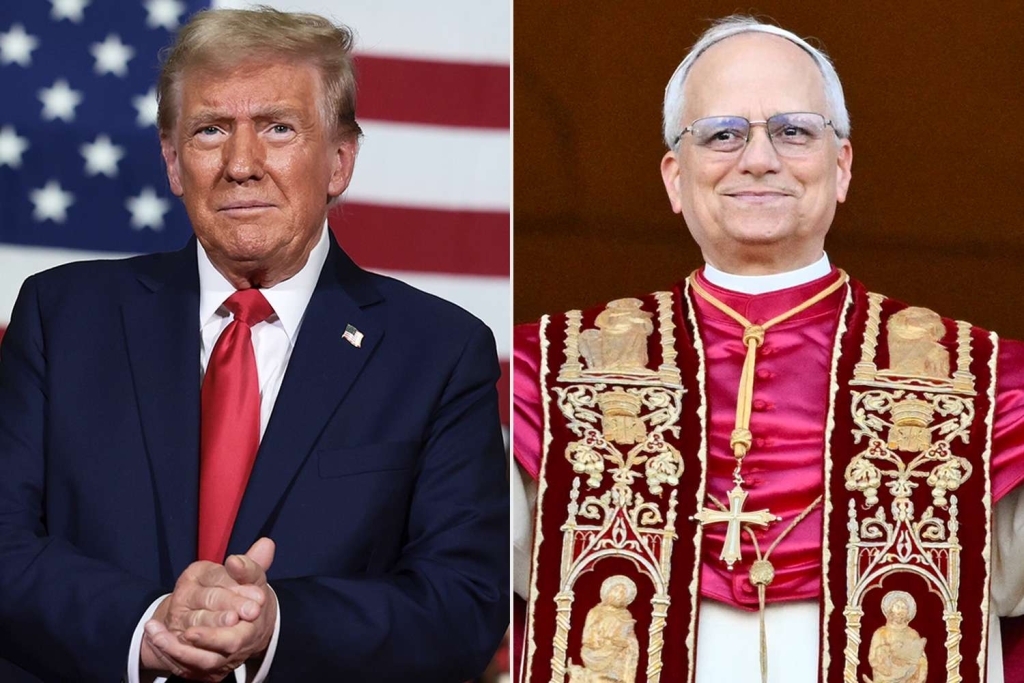
There is long-standing tension between political power and religious authority, especially as interpreted in Scripture and by Ellen G. White. The core issue: civil authority vs. religious authority.
Biblical Pattern: Tension Between Church and State
The Bible repeatedly shows friction between political rulers and religious leaders:
In Daniel, kings like Nebuchadnezzar attempt to enforce worship (Daniel 3).
In Revelation, especially chapter 13, a “beast” power (often interpreted as a religio-political system) works with civil authority to enforce worship.
A key passage:
“And he causes all… to receive a mark…” (Revelation 13:16–17)
This describes a union of religious authority and civil enforcement, one of the central prophetic tensions.
White’s Framework on This Conflict
White consistently warned about a future union of church and state, particularly involving the United States and the papacy.
Union of Church and State
“When the leading churches of the United States… shall influence the state to enforce their decrees… then Protestant America will have formed an image to the papacy.” (Great Controversy, p. 445)
She describes a scenario where:
- Religious institutions seek influence
- Political leaders enforce religious norms
- Liberty of conscience is threatened
Role of the Papacy
White identified the papal system (not individuals personally, but the institution) as a prophetic power:
“The papacy is just what prophecy declared that she would be…” (Great Controversy, p. 571)
She connects this to the “beast” power of Revelation 13.
Role of the United States
She also made a striking claim about America:
“The United States… will be foremost in stretching her hands across the gulf to grasp the hand of the Roman power.” (Great Controversy, p. 588)
In her interpretation:
- The U.S. begins as a defender of liberty
- Over time, it shifts toward enforcing religious conformity
What “Fuels” This Kind of Conflict (Conceptually)
In this prophetic framework, the “fuel” of such a conflict would be:
Authority Over Conscience
Who determines truth? God alone, or institutions backed by law?
“We ought to obey God rather than men.” (Acts 5:29)
Worship and Law
Especially the issue of enforced worship (central in Revelation 13)
White emphasized Sabbath vs. Sunday observance as a key test:
“The observance of Sunday… will be enforced by law.” (Great Controversy, p. 592)
Political Power-Seeking Moral Unity
- Governments often seek unity through shared values
- Religion can become a tool for cohesion or control
Fear and Crisis
White repeatedly ties these developments to times of crisis:
“Satan works through the elements also to garner his harvest…” (Great Controversy, p. 589)
Crisis (economic, natural, social) creates pressure for:
- Strong leadership
- Moral legislation
- Religious-national unity
A Balanced Reality Check
It’s important not to jump to conclusions about specific individuals or current events without clear evidence. Prophetic interpretation, especially involving modern figures. has often been misapplied when people try to force-fit headlines into prophecy.
A grounded approach:
- Focus on principles, not personalities
- Watch systems and trends, not rumors
- Stay anchored in Scripture
If You Meant Something More Specific
If you’re referring to:
- A hypothetical scenario
- A rumor or claim you heard
- Or a symbolic interpretation (Trump vs. papacy)
The conflict is real and currently developing, but it’s not just a simple personal feud; it’s a deep ideological clash between political authority and moral/religious authority, with very concrete policy triggers.
Below is a clear, fact-based breakdown of what is actually happening, then I’ll connect it to the broader church–state tension (including Biblical and Ellen White frameworks).
What the Conflict Is About (Based on Current News)
The dispute between Donald Trump and Pope Leo XIV has escalated in 2026 over three main issues:
War and Foreign Policy (especially Iran)
Pope Leo has publicly condemned war escalation, urging diplomacy and warning against destruction.
Trump has defended strong military posture and attacked the pope personally, calling him:
“weak on crime”
“terrible for foreign policy”
The pope responded:
“I have no fear… I will keep preaching peace”
Core conflict:
- Pope → moral limits on war (Catholic just-war tradition, peace emphasis)
- Trump → national security, deterrence, strength
Immigration and Human Dignity
Pope Leo strongly criticized treatment of migrants, saying they are treated:
“worse than… animals”
He has repeatedly challenged U.S. deportation policies and rhetoric
Core conflict:
- Pope → universal human dignity, protection of migrants
- Trump → border control, enforcement, national sovereignty
Death Penalty and Justice
Pope Leo condemned renewed executions and capital punishment policies. He emphasized the dignity of life and the possibility of redemption
Core conflict:
- Pope → pro-life ethic extended to prisoners
- Trump → law-and-order justice approach
Use of Religion in Politics
A major underlying tension:
The pope has warned against using Christianity to justify war or political agendas
Some U.S. leaders have invoked religion in support of policy decisions
This is critical: The dispute is not just policy; it’s about who has the authority to define Christian morality in public life.
Why This Conflict Is So Unusual
Historically, popes and U.S. presidents avoid direct confrontation.
What makes this different:
- Direct public insults and rebuttals
- A U.S.-born pope speaking into American politics
- Ongoing geopolitical crisis (Iran war) driving urgency
- Visible divide among American Catholics
- Analysts describe it as a “clash between moral authority and state power”
Papacy vs. Constitution (The Deeper Layer)
This is where your question goes deeper and more important.
The U.S. Constitution:
- Separates church and state
- Protects religious liberty
- Limits religious authority over law
The Papacy:
Claims moral authority over:
- Ethics
- war
- Human dignity
- Social policy
So the tension becomes:
Who defines moral law in society?
- Elected government?
- Religious authority?
- Individual conscience?
Biblical Framework for This Type of Conflict
The Bible describes exactly this kind of tension:
Two Powers: Civil vs Religious
In Revelation 13:
A beast (religious-political power) works with civil authority to enforce policy.
“He causes all… to receive a mark…” (Rev. 13:16)
This represents the union of religion + state enforcement
Conflict Over Authority
“We ought to obey God rather than men.” (Acts 5:29)
This is the core issue: When state and religious authority diverge
Jesus’ Kingdom vs Political Power
“My kingdom is not of this world” (John 18:36)
Christ rejected:
- Political coercion
- Forced righteousness
Ellen White’s Interpretation (Directly Relevant)
Ellen G. White warned of this exact type of tension:
America + Papacy Interaction
“The United States… will… grasp the hand of the Roman power.” (Great Controversy, p. 588)
She predicts:
- Cooperation AND tension
- Eventual alignment on religious enforcement
Moral Authority vs Civil Power
“When the church shall control the power of the state… the result will be persecution.” (Great Controversy, p. 443)
Crisis as Catalyst
She ties this to global instability:
“In accidents and calamities… Satan is seeking to control…” (Great Controversy, p. 589)
Crisis → pushes:
- Stronger government action
- moral/religious justification
What Is Actually Fueling the Conflict
Stripping away personalities, the real drivers are:
Competing Moral Frameworks
- Catholic social teaching (peace, dignity)
- Nationalist policy framework (security, sovereignty)
Authority Clash
- Pope: moral voice over nations
- President: constitutional executive power
Religion in Public Policy
Is Christianity:
- A guiding ethic?
- Or a political tool?
Global Crisis Pressure
- War (Iran)
- Migration
- Social instability
These force:
- Faster decisions
- Sharper disagreements
A Grounded Conclusion
This is not just a personality clash. It is a structural conflict between:
- Spiritual authority (papacy)
- Constitutional authority (U.S. presidency)
And it is unfolding over:
- War
- Human rights
- Justice
- The role of Christianity in governance