


Primary Texts: Daniel 7:9–14, 22 • Hebrews 9:24–28 • Romans 8:1 • Revelation 22:11–12
Grounded in Scripture and the writings of Ellen G. White, especially The Great Controversy and The Desire of Ages.
The Word We Fear
There is a word that can silence a room in church.
That word is judgment.
For some, it evokes:
- Anxiety
- Scrutiny
- Exposure
- The possibility of rejection
But what if judgment is not primarily about God trying to exclude you?
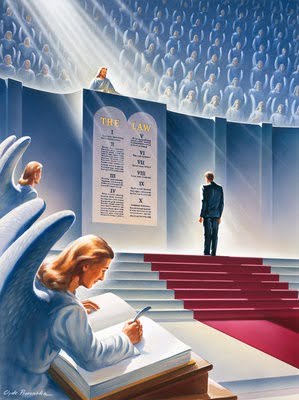
What if judgment is about God publicly defending those who trusted His Son?
Tonight, we go to the courtroom of heaven, not to tremble, but to rejoice.
The Courtroom Opens (Daniel 7)
Read: Daniel 7:9–10
“The judgment was set, and the books were opened.”
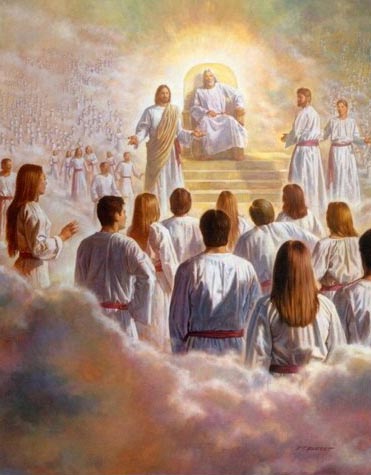
Daniel sees:
- Thrones set in place
- The Ancient of Days seated
- A cosmic court convened
Then in verse 13–14, the Son of Man approaches the Father.
And in verse 22, something extraordinary happens:
“Judgment was given in favor of the saints of the Most High.”
Notice carefully:
The judgment is not primarily against the saints.
It is rendered in favor of them.
The Context Matters
Daniel 7 is filled with beasts — oppressive powers, persecution, injustice.
The judgment scene is heaven’s response to injustice.
Judgment is not terror for the faithful.
It is vindication.
The Judge is Your Savior
Jesus says in John 5:22:
“The Father judges no man, but hath committed all judgment unto the Son.”
Let that settle into your heart.
The One who judges you is the One who:
- Took your place
- Bore your sin
- Carried your shame
- Died your death
1 John 2:1 declares:
“If any man sin, we have an advocate with the Father, Jesus Christ the righteous.”
In earthly courts, the judge and your defense attorney are two different people.
In heaven, they are the same Person.
The Cross Secured the Verdict
Hebrews 10:14 says:
“By one offering He hath perfected forever them that are sanctified.”
The sacrifice is complete.
So what is the judgment about?
Hebrews 9:24 explains:
“Christ is not entered into the holy places made with hands… but into heaven itself, now to appear in the presence of God for us.”
The cross provided the atonement.
Christ’s priestly ministry applies it.
In The Great Controversy, Ellen White writes:
“The work of the investigative judgment and the blotting out of sins is to be accomplished before the second advent of the Lord.”
But she balances this with gospel assurance:
“All who have truly repented of sin, and by faith claimed the blood of Christ as their atoning sacrifice, have had pardon entered against their names.”
Judgment is not about Christ deciding whether His sacrifice was enough.
It is about revealing who accepted it.
No Condemnation
Romans 8:1 declares:
“There is therefore now no condemnation to them which are in Christ Jesus.”
Notice:
It does not say — no investigation.
It says — no condemnation.
Why?
Because condemnation was poured out at Calvary.
The judgment does not override the cross.
It upholds it
What the Judgment Reveals
Revelation 22:11–12:
“He that is unjust, let him be unjust still… Behold, I come quickly; and my reward is with me.”
Before Jesus comes, destinies are settled.
The judgment reveals:
- Who clung to Christ
- Who resisted His Spirit
- Who surrendered when convicted
In The Desire of Ages, White writes:
“Those who accept Christ as their personal Saviour are not left as orphans.”
Judgment does not ask:
“Were you flawless?”
It asks:
“Did you trust My Son?”
Why We Fear, and Why We Shouldn’t
We fear judgment because:
- We know our failures.
- We know our hidden thoughts.
- We know our inconsistencies.
But heaven already knows.
The question is not:
“Will my sins be exposed?”
The question is:
“Are they covered?”
Psalm 32:1— “Blessed is he whose transgression is forgiven, whose sin is covered.”
Covered by what? The righteousness of Christ.
Living in the Judgment Hour
Revelation 14:7— “Fear God… for the hour of His judgment is come.”
This is not terror-fear.
It is reverent alignment.
Living in the judgment hour means:
- Quick repentance
- Immediate surrender
- Ongoing trust
- Daily dependence
It means walking closely with your Advocate.
The Final Scene
In The Great Controversy, White describes the climactic moment:
“Soon there appears in the east a small black cloud… It is the cloud which surrounds the Saviour.”
When Christ appears, He does not come to begin judgment.
He comes because it is finished.
The verdict has already been rendered.
And for those in Christ, that verdict is life.
Appeal
Maybe you have feared the judgment.
Maybe you’ve wondered,
“Will I be good enough?”
Let me answer plainly:
You will never be good enough.
But Christ is.
And if you are in Him,
His record stands in your place.
Judgment without Christ is terrifying.
Judgment with Christ is assurance.
So tonight, the appeal is simple:
Not — “Try harder.”
But — “Trust deeper.”
Place your life fully in the hands of your Advocate.
Because when the books are opened,
those covered by His blood
have nothing to fear.
Closing Prayer
“Lord Jesus, You are my Judge and my Savior. I place my life in Your hands. Cover me with Your righteousness. Shape my character by Your Spirit. And when You come, let me stand without fear — because I stand in You. Amen.”
Historical Adventist Theological Development
Judgment Without Fear — From Disappointment to Assurance
This section expands and shows how Seventh-day Adventist theology developed its understanding of the investigative judgment — and how assurance remained central when properly framed.
Grounded in Scripture and the writings of Ellen G. White, especially The Great Controversy.
The Millerite Movement and the Great Disappointment (1830s–1844)
William Miller and the 2300 Days
In the early 19th century, William Miller concluded from Daniel 8:14:
“Unto two thousand and three hundred days; then shall the sanctuary be cleansed.”
He interpreted:
- The 2300 days as 2300 years
- The sanctuary as the earth
- The cleansing as the Second Coming
He predicted Christ would return around 1843–1844.
October 22, 1844 — The Great Disappointment
When Christ did not return, thousands experienced profound spiritual crisis.
But instead of abandoning Scripture, a small group re-examined their assumptions.
They asked:
- Was the timing wrong?
- Or was the event misunderstood?
This is where the theology of the heavenly sanctuary began to develop.
The Sanctuary Re-examined
Hiram Edson’s Insight
The morning after October 22, 1844, Hiram Edson reported a conviction that:
The sanctuary in Daniel 8:14 was not the earth —
but the heavenly sanctuary described in Hebrews 8–9.
Instead of Christ coming to earth,
He entered the Most Holy Place of the heavenly sanctuary.
Hebrews Revisited
Hebrews 8:1–2:
“We have such an high priest… a minister of the sanctuary, and of the true tabernacle, which the Lord pitched, and not man.”
The shift was theological:
1844 marked not the Second Coming,
but a new phase of Christ’s high priestly ministry.
Early Adventist Integration (1845–1880s)
The developing Sabbatarian Adventist movement connected:
- Daniel 7 — Judgment scene
- Daniel 8:14 — Cleansing of sanctuary
- Hebrews 9 — Heavenly priesthood
- Revelation 14:7 — Judgment hour message
The investigative judgment became a central explanatory doctrine.
But tension emerged:
How do you preach judgment without producing insecurity?
Ellen White’s Balancing Contribution
Ellen White affirmed:
“The work of the investigative judgment… is to be accomplished before the second advent of the Lord.”
Yet she consistently emphasized assurance:
“All who have truly repented… have had pardon entered against their names.”
Her theological balancing act included:
1. Objective Atonement (Finished at the Cross)
Christ’s sacrifice is complete.
2️. Ongoing Intercession
Christ applies His merits in heaven.
3. Vindication of God’s Character
The judgment reveals transparency before the universe.
She did not portray God as searching for reasons to reject —
but as demonstrating the justice and mercy of salvation.
1888 and the Righteousness by Faith Emphasis
At the 1888 General Conference session in Minneapolis, Alonzo T. Jones and Ellet J. Waggoner emphasized justification by faith.
Their message clarified:
- The believer stands complete in Christ.
- Righteousness is received, not achieved.
- Assurance rests in Christ’s merits, not human performance.
Ellen White strongly supported this Christ-centered emphasis.
This moment was pivotal.
It protected the sanctuary doctrine from becoming legalistic.
Twentieth-Century Theological Clarification
Over time, Adventist theologians further refined:
- The relationship between Hebrews 10:14 and the ongoing ministry of Christ.
- The difference between atonement provided and atonement applied.
- Assurance grounded in union with Christ.
While internal debates occurred, the most balanced presentations maintained:
Judgment does not compete with justification by faith.
It publicly confirms it.
Core Theological Development in Summary
| Era | Development | Emphasis |
| Millerite | Prophetic timing | Imminent return |
| Post-1844 | Heavenly sanctuary | Christ’s ministry |
| Early Adventist | Investigative judgment | Transparency & accountability |
| 1888 | Righteousness by faith | Assurance in Christ |
| Modern articulation | Christ-centered judgment | Vindication not terror |
Preaching Judgment Without Fear (Historical Lessons)
History teaches three crucial lessons:
1️. Do Not Separate Judgment from the Cross
When that happens, anxiety results.
2. Do Not Separate Judgment from Christ’s Intercession
He is both Priest and Judge.
3. Do Not Separate Judgment from Assurance
Romans 8:1 must stand beside Daniel 7.
The Mature Adventist Framing
The healthiest historical articulation is this:
- The cross secured salvation.
- Christ ministers its benefits.
- The judgment reveals who has embraced Him.
- The Second Coming executes the verdict.
And that verdict, for those in Christ, is life.
“The doctrine that once caused fear became, through deeper study and Christ-centered clarity, one of the most beautiful truths in Scripture — a God who opens the books not to exclude His children, but to defend them before the universe.”
Scholarly Footnotes & Primary Source Citations
Judgment Without Fear — Historical & Theological Documentation
This section expands your sermon manuscript with academic-style documentation and key primary quotations — especially from the 1888 era — showing how righteousness by faith and the investigative judgment were integrated within Adventist theology.
The Investigative Judgment in Early Adventist Thought
After October 22, 1844, Adventist pioneers re-examined Daniel 8–9 and Hebrews 8–9, concluding that Christ entered the Most Holy Place of the heavenly sanctuary rather than returning to earth.¹
Primary Sources
Hiram Edson (1844 Manuscript Fragment):
“Instead of our High Priest coming out of the Most Holy of the heavenly sanctuary… He for the first time entered on that day the second apartment of that sanctuary.”²
R. L. Crosier, Day-Star Extra (Feb. 7, 1846):
“The sanctuary to be cleansed at the end of the 2300 days is the heavenly sanctuary.”³
These early formulations laid the exegetical foundation connecting:
- Daniel 7 (judgment scene)
- Daniel 8:14 (cleansing of sanctuary)
- Hebrews 9 (heavenly priesthood)
- Revelation 14:7 (judgment hour proclamation
Ellen White’s Early Sanctuary Affirmations
In The Great Controversy, Ellen White articulates the mature sanctuary doctrine:
“The work of the investigative judgment and the blotting out of sins is to be accomplished before the second advent of the Lord.”⁴
Yet she balances this with gospel assurance:
“All who have truly repented of sin, and by faith claimed the blood of Christ as their atoning sacrifice, have had pardon entered against their names in the books of heaven.”⁵
This dual emphasis prevents a legalistic distortion:
- Judgment is real.
- Assurance is grounded in Christ’s merits.
The 1888 General Conference: Righteousness by Faith
The 1888 Minneapolis General Conference session marked a theological turning point.
E. J. Waggoner
In Christ and His Righteousness (1890), based on his 1888 presentations:
“Christ is ‘the LORD our righteousness.’… The righteousness which we must have in order to appear in the judgment is the righteousness of Christ.”⁶
He further wrote:
“It is not our faith that makes us righteous; it is Christ. Faith only lays hold upon His righteousness.”⁷
Waggoner explicitly connected justification by faith with standing in the judgment.
A. T. Jones
From sermons later published in The Consecrated Way to Christian Perfection:
“Perfection of character is the Christian goal — perfection attained in human flesh in this world.”⁸
Yet Jones clarified the source:
“It is Christ dwelling in the heart by faith who accomplishes this.”⁹
This emphasis ensured:
Sanctification flows from union with Christ — not legal striving.
Ellen White on 1888
Ellen White strongly endorsed the Christ-centered message:
“The Lord in His great mercy sent a most precious message to His people through Elders Waggoner and Jones.”¹⁰
She summarized its content:
“This message was to bring more prominently before the world the uplifted Savior… It presented justification through faith in the Surety.”¹¹
Thus, the 1888 message did not dismantle the sanctuary doctrine; it protected it from moralism.
Judgment and Assurance in Later Adventist Theology
As Adventist scholarship matured in the 20th century, theologians worked to articulate harmony between:
- Hebrews 10:14 (“perfected forever”)
- Ongoing priestly ministry (Hebrews 9:24)
- Daniel 7’s pre-Advent judgment
Scholars such as Edward Heppenstall emphasized that:
The investigative judgment does not determine who will be saved by weighing human merit, but reveals who has accepted Christ’s righteousness by faith.¹²
Heppenstall insisted justification is complete in Christ, while the judgment reveals authentic faith-union.
Theological Synthesis
A historically balanced Adventist articulation includes:
- Objective Atonement Completed at the Cross
Hebrews 10:14 - Subjective Application Through Ongoing Intercession
Hebrews 9:24 - Cosmic Transparency in the Judgment
Daniel 7:22 - Assurance Grounded in Union with Christ
Romans 8:1
The healthiest Adventist preaching tradition places Romans 8 beside Daniel 7.
“Our pioneers wrestled deeply with Daniel and Hebrews. After 1844, they discovered not a failed prophecy, but a larger Christ. And in 1888, God protected that discovery from becoming legalistic by re-centering everything on Christ’s righteousness. The judgment is not about how good you are — it is about whether you are in Him.”
Footnotes
- George R. Knight, A Brief History of Seventh-day Adventists (Review and Herald, 1999), 32–45.
- Hiram Edson Manuscript Fragment, 1844, Center for Adventist Research.
- O. R. L. Crosier, “The Law of Moses,” Day-Star Extra, Feb. 7, 1846.
- Ellen G. White, The Great Controversy (1911 ed.), 480.
- Ibid., 483.
- E. J. Waggoner, Christ and His Righteousness (1890), 9.
- Ibid., 64.
- A. T. Jones, The Consecrated Way to Christian Perfection (1905), 84.
- Ibid., 76.
- Ellen G. White, Testimonies to Ministers, 91.
- Ibid., 92.
- Edward Heppenstall, Our High Priest (Review and Herald, 1972), 99–110.
Concluding Theological Clarity
The historical record shows:
- The sanctuary doctrine arose from careful exegesis.
- 1888 safeguarded it with righteousness by faith.
- Mature Adventist theology affirms assurance in Christ.
- Judgment without Christ is terrifying.
- Judgment in Christ is vindication.
Praise God from Whom all blessings flow!