


Imagine sitting on a hill, surrounded by friends and family, all eyes trained on the clouds. Your heart burns with confidence, joy, and expectancy. Jesus is coming today! The Bible said so.
The day grows darker. Clouds turn into stars. You wait . . . and wait . . . and wait.
Jesus doesn’t come.
Such was the sorrowful experience of those who accepted the religious teachings of William Miller in the 1830s and 40s. That highly anticipated day—October 22, 1844—was rightly named the Great Disappointment. For some, however, the bitterness of that day only fueled their search for truth.
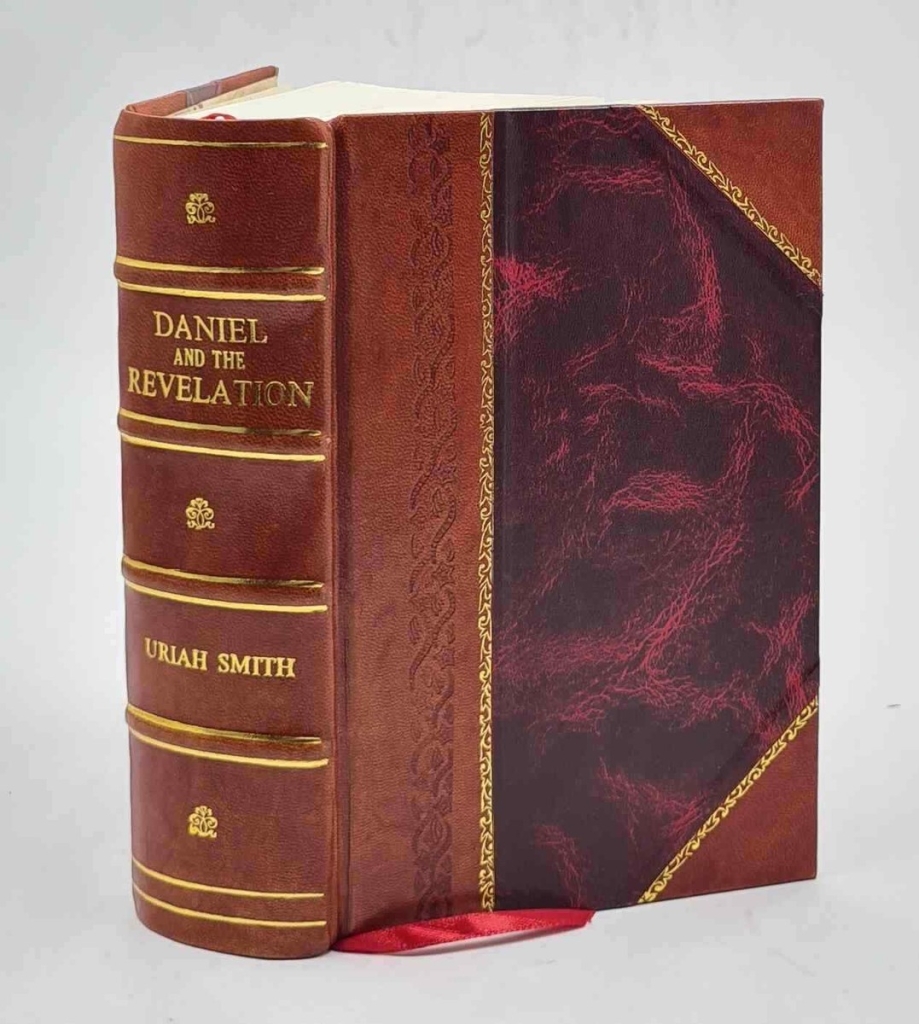
Born in the ashes of the Millerite movement, the Seventh-day Adventist Church has always prioritized the in-depth study and correct interpretation of Bible prophecy. In many ways, Bible prophecy—specifically the continuing prophecies detailed in Daniel and Revelation—shapes some of Adventists’ core beliefs and prepares them for the end times.
One Story, Two Books: Understanding Daniel and Revelation
Seventh-day Adventists view Daniel and Revelation as companion books—two halves of a single prophetic message:
- Daniel lays out the historical progression of world powers.
- Revelation reveals the spiritual and religio-political implications of that same history.
Ellen G. White, a highly published Christian writer and Adventist pioneer, states:
“The books of Daniel and the Revelation are one. One is a prophecy, the other a revelation; one a book sealed, the other a book opened.” (Letters and Manuscripts, Volume 15, par. 23)
Together, Daniel and Revelation trace a continuous conflict over authority, law, and worship, culminating in a final test of allegiance.
Explaining Daniel 7: The Prophetic Backbone of Revelation
Daniel 7 presents four beasts rising from the sea (verses 2–3), explicitly interpreted as four kingdoms (verse 17).
The Beasts of Daniel 7
| Beast | Identification (Adventist View) | Key Traits |
| Lion | Babylon | Political power |
| Bear | Medo-Persia | Uneven dominance |
| Leopard | Greece | Rapid conquest |
| Terrible, Horned Beast | Rome | Crushing power |
These beasts mirror the segments of Daniel 2’s statue, but Daniel 7 adds a religious dimension to the story.
Explaining Daniel 7’s Little Horn
“After that, in my vision at night I looked, and there before me was a fourth beast. . . . It was different from all the former beasts, and it had ten horns. While I was thinking about the horns, there before me was another horn, a little one, which came up among them.” (Daniel 7:7–8)
Other key verses on the little horn are 20–25.
The little horn stands as the theological center of Daniel 7. Its characteristics are:
- Arises from Rome
- Has eyes (intelligence) and a mouth (authority)
- Speaks blasphemy
- Persecutes the saints
- “Shall intend to change times and law” (verse 25)
- Rules for a prophetic period (“time and times and half a time,” verse 25)
Seventh-day Adventists identify the little horn as papal Rome—not merely as a political entity, but as a religio-political system.
The phrase “change times and law” found in verse 25 is crucial, as:
- God’s law, the Ten Commandments, includes only one commandment involving time—the Sabbath.
- Seventh-day Adventists believe Rome’s attempted substitution of Sunday for the seventh day—and the papacy’s continuation of this change—fulfills this claim.
White writes:
“An intentional, deliberate change is presented: ‘He shall think to change the times and the law.’ The change in the fourth commandment exactly fulfills the prophecy. For this the only authority claimed is that of the church. Here the papal power openly sets itself above God.” (The Great Controversy, p. 446)
Explaining Daniel 7’s Judgment Scene
Verses 9–14 tell us that before the Second Coming of Jesus:
- Thrones are put in place
- Books are opened
- Judgment is rendered in favor of the saints
In this chapter, Daniel introduces the investigative judgment, which Seventh-day Adventists would later connect with Daniel 8 and Revelation 14.
Explaining Daniel 8: The Attack on God’s Authority and Cleansing of the Sanctuary
Daniel 8 revisits the same powers presented in Daniel 7, but it shifts focus from political dominance to the corruption of worship.
In verses 20–21, the angel Gabriel interprets Daniel’s vision about the ram and goat. He explains that:
- The ram represents Medo-Persia
- The goat represents Greece
This explicit interpretation confirms historicism as the correct way to interpret these prophecies.
Explaining Daniel 8’s Reappearance of the Little Horn
In verses 9–12, the same little horn power appears again. Daniel now emphasizes that this horn:
- Cast down some of the host of heaven
- Casts down the place of the Prince’s sanctuary
- Replaces truth with tradition
- Prospers through deception
We can understand that this little horn power:
- Magnifies itself
- Undermines Christ’s priestly ministry
- Obscures God’s law and Gospel
Explaining Daniel 8’s 2,300 Days
“And he said to me, ‘For two thousand three hundred days; then the sanctuary shall be cleansed.’ ” (Daniel 8:14)
Seventh-day Adventists interpret this verse as:
- A day-year prophecy (one prophetic day = one literal year)
- Pointing to a heavenly judgment phase
- Pointing to a restoration of truth about God’s character, law, and worship
This cleansing answers the distortion caused by the little horn.
From Daniel to Revelation, From Power to Worship
What Daniel describes historically, Revelation describes experientially. Daniel 7–8 describes who gains authority and how; Revelation 13–14 describes how humanity responds.
Explaining Revelation 13: The Maturing of the Powers Described in Daniel
Revelation 13:1–10 introduces the beast from the sea. This power:
- Has the features of Daniel’s lion, bear, and leopard combined
- Receives authority from the dragon
- Speaks blasphemy
- Persecutes the saints
Seventh-day Adventists believe this sea beast is the continuation of the little horn: papal authority extended into the end times of Revelation.
Revelation 13:11–18 introduces the beast from the earth. This power:
- Arises from the earth (new territory)
- Appears at first like a lamb (grants freedom)
- Later speaks as a dragon (coercion)
Seventh-day Adventists believe this earth beast to be the United States, based on the country’s:
- Rise after papal decline
- Founding principles of liberty
- Future role in enforcing worship
This power images the former beast; it replicates the church-state union of papal Rome.
Explaining Revelation 13’s Mark of the Beast
As described in this chapter, the mark of the beast is:
- Connected to worship
- Enforced by law
- Tied to economic pressure
From a Seventh-day Adventist view, this mark represents submission to human authority in worship, particularly Sunday observance when mandated.
White clarifies:
“ ‘When Sunday observance shall be enforced by law, and the world shall be enlightened concerning the obligation of the true Sabbath, then whoever shall transgress the command of God, to obey a precept which has no higher authority than that of Rome, will thereby honor popery above God . . . they will thereby accept the sign of allegiance to Rome—‘the mark of the beast.’ ” (The Review and Herald, April 27, 1911, par. 23)
Explaining Revelation 14: God’s Final Counter Message
By introducing the Three Angels’ Messages, Revelation 14 answers Revelation 13’s beasts in the same way Daniel 7’s judgment answers the little horn power.
- The first angel calls for the restoration of true worship (verses 6–7).
This message:
- Calls humanity to fear God
- Announces judgment
- Calls for worship of the Creator
The language this first angel uses echoes Exodus 20:11, part of the Sabbath commandment. Seventh-day Adventists believe this similarity indicates that the Sabbath will become the sign of allegiance to the Creator.
- The second angel announces Babylon’s fall (verse 8).
Babylon represents:
- Confusion
- Church-state compromise
- Tradition replacing Scripture
It includes any system that enforces worship contrary to conscience. Ultimately, human authority over worship will be crushed, forever replaced by divine authority.
- The third angel proclaims a final warning (verses 9–12).
This message contrasts two groups:
| Group 1 (The Wicked) | Group 2 (The Saints) |
| Worships the beast and his image | Worships the Creator |
| Receives the mark | Keeps God’s commandments |
| Submits to coercion | Chooses faithfulness amid persecution |
Verse 12 plainly summarizes the saints as those who “keep the commandments of God and the faith of Jesus.”
Explaining These Prophecies’ Unifying Theme
We can frame the conflicts explained in Daniel and Revelation using one question: Who has the right to command worship—God or human authority?
Of course, the answer is God, our Creator and Savior. Yet, He never forces us to worship Him because he desires our authentic love.
White writes:
“The exercise of force is contrary to the principles of God’s government.” (The Desire of Ages, p. 22)
Throughout her writings, she repeatedly emphasizes:
- God never forces worship.
- Satan always does.
- The final worldly crisis will be about conscience.
Sunday laws are not problems by themselves—the true problem is coerced worship.
Contrasting Adventist Beliefs on End-Time Prophecies With Other Christian Perspectives
Evangelical Futurism:
- The antichrist will be a future individual world leader.
- The mark of the beast will be a literal mark.
- The Sabbath law is not as binding as it once was, and obeying this law will not constitute a last-day test.
Preterism:
- Most events described in Daniel and Revelation have already occurred.
- There will be no end-time test of worship.
Idealism:
- The tests and trials described in Revelation are symbolic and ongoing.
- No historical specificity is tied to the events described in Daniel and Revelation.
Catholic Theology:
- The Church has authority over regulation of worship.
- Sunday is the Church’s established day of worship.
- Some Bible prophecies will occur in the future, but emphasis isn’t placed on timelines or specific events.
Historicism/Adventism stands apart by insisting:
- Bible prophecy unfolds historically, leading to a final crisis.
- God’s law remains relevant.
- End-time prophecy culminates in a last-day test of obedience centering around worship.
From Daniel to Revelation: The Full Prophetic Arc Summarized
| Daniel 7–8 | Revelation 13–14 | Theme |
| Beasts | Beasts | Human Authority |
| Little Horn | Sea Beast | Religious Power |
| Judgment | Three Angels | Restoration |
| Law Attacked | Law Upheld | Allegiance |
| Sanctuary Cleansed | Gospel Proclaimed | Vindication of God |
From Daniel to Revelation, Bible prophecy does not proclaim fear—it gives clarity and hope.
In the end times, the final issue of humanity will not be:
- Catholic vs. Protestant
or
- Saturday vs. Sunday as the preferred day of worship
The final test will be about:
- Force vs. freedom
- Human law vs. God’s law
- Compelled worship vs. love-based obedience
The Seventh-day Adventist prophetic message insists that God wins by truth, never by coercion, and that His final call is not to conform—but to choose.
Choose grace, which breeds obedience (Titus 2:11–12). Choose love, which casts out fear (1 John 4:18). Choose Jesus.
Related Articles:
- Four Angels: Understanding the Final Messages of Revelation
- Why Do Christians Worship on Sunday? Understanding the Tradition
- America in Prophecy: Revelation 13 and the Final Crisis
Learn more about Bible prophecy and end-time events by checking out our study guides, videos, podcasts, and more!
Scripture quotations are taken from the New King James Version®. Copyright © 1982 by Thomas Nelson. Used by permission. All rights reserved.